Best Thuja Plicata Zebrina Extra Gold Alternatives for Gardeners
Thuja plicata ‘Zebrina Extra Gold’ is a golden-foliaged western red cedar, but none of the products listed here is identified as that cultivar. The closest options are other golden arborvitae: Forever Goldy is suited to compact planting, Berkman’s Gold to landscape structure, and Polar Gold to gardeners seeking a larger plant with stated hardiness details. Check the botanical name and cultivar before buying if you specifically need ‘Zebrina Extra Gold.’
| Product | Best For | Key Distinction |
|---|---|---|
| Forever Goldy Thuja | Containers and accents | Compact shrub; heat and drought tolerant once established |
| Berkman’s Gold Arborvitae | Landscape structure | Three plants; pyramidal form |
| Polar Gold Arborvitae | Cold-climate planning | Zones 3–8; stated mature dimensions |
| Oriental Arborvitae Seeds | Growing from seed | Thuja orientalis, not Thuja plicata |
| Zebra Plant Succulent | Indoor succulent growing | Not an arborvitae or tree |
Forever Goldy Thuja

Best for: Gardeners who want golden evergreen color in a container or as a border accent. This compact shrub is described as having gold-yellow foliage that stays vibrant year-round without shedding. The listing also identifies container gardening and placement at the back of garden borders as uses.
Why it was selected: It is a Thuja with golden foliage, making it a closer visual and genus-level match than the unrelated seed and succulent listings. The product description says it tolerates heat and drought once established and is low maintenance.
Limitation: The listing does not identify it as Thuja plicata ‘Zebrina Extra Gold’ or provide mature dimensions. Avoid choosing it as a confirmed substitute for that named cultivar without verifying its botanical identity and size.
Berkman’s Gold Arborvitae

Best for: Buyers planning a structured landscape planting who want multiple golden-foliaged plants. The listing offers three live plants and describes a pyramidal shape suited to adding structure. It identifies the plant as Thuja occidentalis, also known as northern white cedar, rather than Thuja plicata.
Why it was selected: Its golden foliage and arborvitae form make it relevant for shoppers seeking a golden evergreen alternative. The listing says it grows in full to partial sunlight.
Limitation: The species is Thuja occidentalis, not the requested western red cedar cultivar. The supplied details do not state mature height, width, or hardiness zone, so confirm those requirements before planning a hedge or screen.
Proven Winners Polar Gold Arborvitae

Best for: Gardeners comparing golden arborvitae for colder regions or larger planting spaces. The listing states a mature size of 12–15 feet tall and 4–7 feet wide, and hardiness in USDA zones 3–8. It recommends part to full sun, defined as at least four hours daily.
Why it was selected: It provides more explicit size and zone information than the other live arborvitae listings, which can help with site planning. The package is described as a four-pack of live plants in 4.5-inch-quart containers.
Limitation: This is Thuja occidentalis, not Thuja plicata ‘Zebrina Extra Gold.’ Its stated mature size may also be too large for a small container or narrow planting strip.
Oriental Arborvitae Seeds
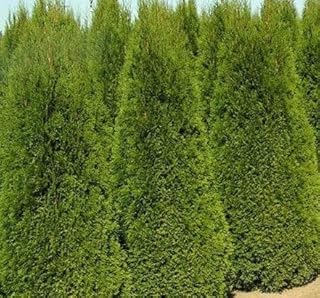
Best for: Experienced growers who want to start an ornamental conifer from seed rather than purchase an established plant. The listing identifies the seed as Thuja orientalis, also called Platycladus orientalis, and describes a trial packet of about 85 seeds.
Why it was selected: It is a conifer used ornamentally for hedges, screens, or specimen planting, according to the product information. It is included as a genus-adjacent option for gardeners exploring arborvitae.
Limitation: These are seeds of a different species, not a named golden Thuja plicata cultivar. The listing does not promise golden foliage or provide growing instructions, so it is not a direct substitute for the requested plant.
Haworthia Zebra Plant

Best for: Indoor plant buyers looking for a small succulent, not anyone seeking an arborvitae. This Haworthia fasciata comes in a 2.5-inch pot. The listing recommends bright, indirect light or morning sun and watering when the soil is dry.
Why it was selected: It appears in the supplied product list under “Zebra Plant,” but the name refers to a striped succulent rather than Thuja plicata ‘Zebrina Extra Gold.’ Distinguishing the two can prevent a mistaken purchase.
Limitation: This is not a tree, shrub, or Thuja. Choose it only if you want a small succulent with zebra-like markings.
Buying Guide: How To Choose A Golden Arborvitae
Does the botanical name match the requested cultivar?
Check both the species and cultivar on the product listing or plant label. Thuja plicata ‘Zebrina Extra Gold’ is not interchangeable with Thuja occidentalis or Thuja orientalis simply because all are called arborvitae. If the exact cultivar matters, ask the seller to confirm the botanical name before ordering.
How much space and sunlight does the site offer?
Compare mature height and width with the available planting area. Among these listings, Polar Gold provides stated mature dimensions; Forever Goldy is described as compact but does not give measurements. The listed light guidance also differs: Polar Gold calls for at least four hours of sun, while Berkman’s Gold is described as suitable for full to partial sunlight.
Should you buy a plant or seeds?
A live plant avoids the seed-starting stage, while seeds suit gardeners prepared to grow a plant from the beginning. The Oriental Arborvitae packet is a different species and does not establish that seedlings will have the characteristics of ‘Zebrina Extra Gold.’ For a named cultivar, buy only when the seller confirms cultivar identity.
What growing conditions should you verify?
Use the product’s stated zone, light, size, and care details as a starting point, then compare them with your local climate and planting site. Polar Gold lists zones 3–8. Forever Goldy is described as heat and drought tolerant once established. The provided listings do not give complete care details for every product.
Frequently Asked Questions
Is any listed product Thuja plicata ‘Zebrina Extra Gold’?
No. The supplied listings do not identify any product as that species and cultivar. The live golden arborvitae options are presented under other names or without a matching cultivar identification.
Which listed option is best for a compact planting?
Forever Goldy is described as compact and suitable for containers or garden borders. Its listing does not provide mature dimensions, so confirm the expected size before planting.
Which option includes hardiness-zone information?
Proven Winners Polar Gold is listed as hardy in USDA zones 3–8 and is described as reaching 12–15 feet tall and 4–7 feet wide at maturity.
Are Oriental Arborvitae seeds the same as Thuja plicata?
No. The seed listing identifies its plant as Thuja orientalis, also known as Platycladus orientalis. It is not Thuja plicata ‘Zebrina Extra Gold.’
Is the Zebra Plant an arborvitae?
No. The Zebra Plant listing is for Haworthia fasciata, a small succulent. It is unrelated to arborvitae trees and shrubs.