Best Tools for Breaking Up Soil for Grass Seed and Seedbed Prep
Answer: For effective grass seeding, use a mix of soil-breaking tools, seeders, and leveling rakes that loosen the topsoil, create seed channels, and improve seed-to-soil contact. This selection targets compacted lawns, patchy areas, and hard-to-reach spots. The top picks below are best suited for homeowners reseeding bare patches, maintaining athletic fields, or prepping small to medium lawns.
The table below summarizes the five chosen products, highlighting who they’re best for and what they improve in the overseeding and soil-prep process.
| Product | Best For | Why It Was Selected |
|---|---|---|
| Landzie Overseeder | Lawn reseeding; larger bare patches | Creates precise seed channels for better germination; two-pass approach with a roller for improved seed-to-soil contact |
| Keyfit Tools Hand Seeder Spiker Tool | Small areas; tight spaces | Multiple spiker wheels to pierce soil and place seed precisely where you need it |
| BeeOwner Lawn Leveling Rake | Soil leveling and smoothing | Durable stainless steel, adjustable handle; helpful for even seedbed and mixing amendments |
| Garden Guru Handheld Seed Spreader | Even distribution of seed and lawn products | Adjustable openings for precise coverage; lightweight and easy to maneuver |
| Fiskars Soil Block Maker | Seedling blocks and germination beds | Environmentally friendly soil blocks; promotes healthy root systems via air pruning |
Landzie Overseeder

The Landzie Overseeder specializes in creating shallow, precise channels in soil to improve seed-to-soil contact, which helps grass seed germination. It is particularly useful before seeding to break up the top layer of soil. Using it as part of a two-pass overseeding process with a roller helps press seeds down, protecting them from surface runoff and predators. It’s best for larger bare patches and lawn renovation where vertical seed placement and channels matter for rapid establishment.
Best for: homeowners reseeding large areas and turf managers who want a structured, channel-based seed placement. The two-pass approach is advantageous when you want both soil preparation and seed burial for better germination. A potential limitation is that it may be less practical for very small or highly decorative garden beds where maneuverability is critical.
Caution: follow two-pass steps carefully to avoid overworking the soil in tiny regions; ensure the soil isn’t overly compacted before use.
Keyfit Tools Hand Seeder Spiker Tool

The Keyfit Tools Hand Seeder Spiker Tool is designed for small areas, dog spots, brown patches, and tight spaces. It features a heavy-duty forged steel frame with multiple spiker wheels and a large number of spikes, enabling localized seed placement in problem areas where larger machinery cannot reach. This tool is best for precise seed spots and workarounds around edges and obstacles.
Best for: gardeners dealing with confined patches or irregular turf where accuracy matters more than overall speed. It’s a good complement to larger overseeders when you need to target specific zones. Limitation: coverage is slower than bulk overseeders, so plan for extended work in larger yards.
Caution: handle spikes and moving parts with care to avoid punctures or injuries during use.
BeeOwner Lawn Leveling Rake
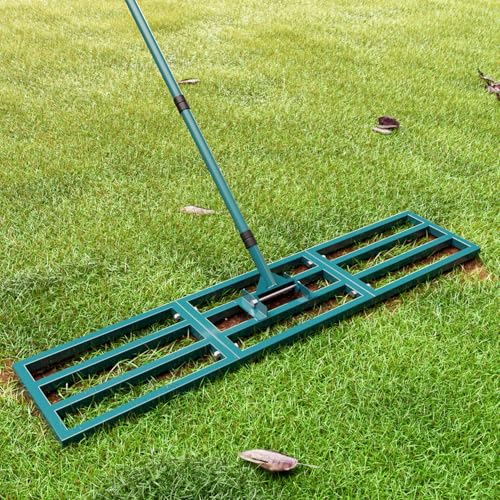
This stainless steel lawn leveling rake is designed to smooth and blend soil while distributing amendments evenly. The 78-inch adjustable handle helps you reach distant areas without excessive bending, and the head is built to resist bending under normal use. It’s well-suited for distributing soil amendments, breaking small clods, and creating a uniform seedbed before seeding.
Best for: achieving a smooth seedbed and mixing amendments for uniform germination. Better for larger, flatter areas than dune-like mounds, compared to small hand tools. Limitation: not a substitute for heavy tillage in heavily compacted soil; it excels as a leveling and blending tool rather than deep loosening.
Caution: avoid overworking soil in sensitive beds; excessive scraping can disturb established roots.
Garden Guru Handheld Seed Spreader

The Garden Guru Handheld Seed Spreader is a lightweight, 1-liter capacity tool designed for precise distribution of grass seed, lawn fertilizer, salt, or ice melt. Its adjustable openings allow handling of different particle sizes, making it versatile for year-round lawn care. It’s ideal for spot seeding and ensuring even coverage in smaller areas or along borders where a larger spreader would over-apply.
Best for: homeowners who want controlled, uniform coverage in small to medium zones without lugging heavier equipment. It’s less efficient for large lawns but shines in precision work. Caution: capacity is limited, so you may need to refill frequently on bigger patches.
Fiskars Soil Block Maker
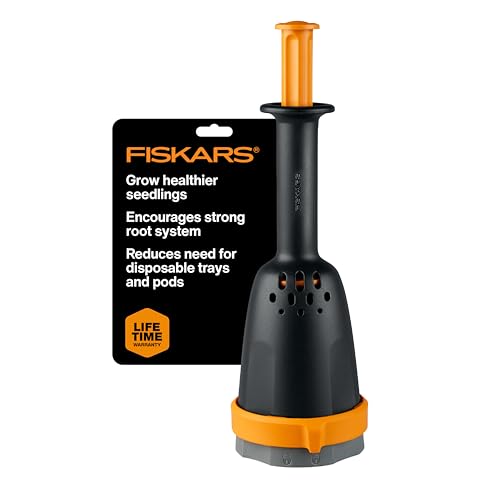
The Fiskars Soil Block Maker helps grow healthier seedlings by enabling natural air pruning within soil blocks. It creates one large block for bigger seeds/plants or multiple smaller blocks for smaller starts. This tool reduces the need for disposable seed starter trays and pods, promoting a more sustainable germination setup. It’s suitable for home gardens and larger seedling operations used to establish robust turf seedlings.
Best for: gardeners who start grass and other plants from seed and want sustainable, reusable seed-starting blocks. Choose this if you prefer soil-block gardening over traditional pots. Limitation: not a direct seed-spreading tool; it’s about seed-starting rather than immediate field seeding.
Buying Guide
What should you consider when choosing soil-prep tools for grass seed?
- Soil condition: If your lawn is heavily compacted, prioritize tools that loosen soil effectively (overseeder, leveling rake) before seed placement.
- Seeding area: For large bare patches, ergonomic, motorized or semi-automatic tools can reduce effort; for tight spaces, hand tools excel.
- Seed placement: Tools that improve seed-to-soil contact lead to faster germination; look for channeling, spiking, and press-down features.
- Coverage vs. precision: Balance bulk overseeding with targeted spot tools to ensure uniform germination and avoid waste.
- Durability and materials: Stainless steel and forged components tend to last longer under outdoor conditions and resist rust.
- Maintenance: Clean tools after use to prevent soil buildup and corrosion; store in a dry place.
Frequently asked questions
- What is the main purpose of an overseeder for grass seed? It creates seed channels and improves seed-to-soil contact for better germination, especially on patchy lawns.
- How do I choose between a spreader and a spiker tool? Use a spreader for even seed distribution over larger areas; use a spiker tool for precise placement in tight spots or irregular patches.
- Can a leveling rake aid overseeding? Yes, it helps create a smooth seedbed and mix amendments, which supports uniform germination.
- Are soil blocks useful for grass seed? Soil blocks support healthy young roots and reduce transplant shock, but they require more seed-starting steps than direct seeding.
- Is combining tools beneficial? Yes. A two-pass strategy—soil loosening or channel creation followed by seed pressing or topdressing—often yields better germination rates.
- Do these tools require special maintenance? Rinse soil off after use, dry completely, and store away from moisture to prevent rust and degradation.