Best Trays for Growing Microgreens: Soil-Free Sprouter Kits to Try
Answer: For reliably growing microgreens at home with minimal mess, select soil-free sprouting trays that offer good drainage, clear humidity control, and ample size for your space. This guide highlights five versatile options suited for beginners and seasoned growers alike, focusing on ease of use, airflow, and maintenance. Each product is chosen for clear water management, portability, and practical setup for indoor microgreens like broccoli, alfalfa, radish, and wheatgrass.
Buyer’s quick reference: chosen products and highlights
| Product | Best For | Key Benefit |
|---|---|---|
| Legigo 5 Pack Seed Sprouter Trays | Small kitchens; beginners | Compact 5-tray set with lids and planting papers; good drainage |
| Legigo 10 Pack Green Seed Sprouter Trays | More seeds; steady supply | Large set with inner mesh for breathability |
| SUNPRO 2-Pack Seed Sprouter Tray | DIY microgreens station | Two large domes with humidity control; beginner-friendly |
| RMBHM Microgreens Growing Trays Kit | Indoor spaces; organized kits | Includes hemp fiber grow mats for soil-free setup |
| Yield Lab 10×20 Inch Propagation Tray (No Drain Holes) | Bulk planting and propagation | Durable 10-pack; no-drain design for stable watering |
Legigo 5 Pack Seed Sprouter Trays With Lids
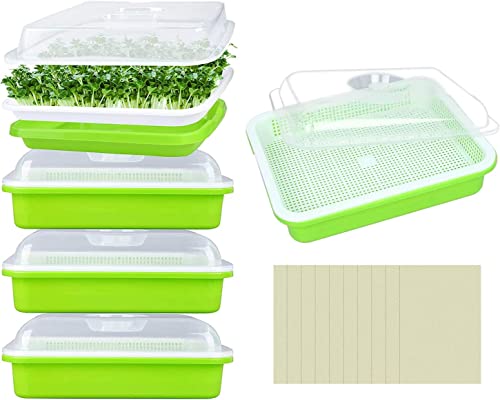
Best for compact setups or first-time microgreen growers. This soil-free kit includes five trays with clear lids, ten planting papers, and a 12.7 x 10.23 x 4.95 inch footprint. The lids help maintain humidity for sprouting, while the small holes in the tray support drainage and air circulation. Suitable for wheatgrass, beans, and other quick greens.
Who it’s best for: homes with limited space or new growers seeking a simple, all-in-one starter set. Why selected: it offers a complete starter package with lids for moisture control and easy cleanup.
Caution: lids may require careful handling to avoid mold in highly humid environments; ensure proper air flow after germination.
Legigo 10 Pack Green Seed Sprouter Trays

Better for ongoing microgreen projects or households needing higher capacity. This set includes 10 sprouting kits with inner and bottom trays plus planting papers, offering a larger overall footprint and enhanced root growth space. The transparent lid supports monitoring while reducing water loss during germination.
Who it’s best for: growing larger batches or sharing with family/friends. Why selected: high capacity with durable, food-grade PP material and a mesh design that improves airflow.
Caution: larger footprint requires more storage space and careful stacking when not in use.
SUNPRO 2-Pack Seed Sprouter Tray With Humidity Lid
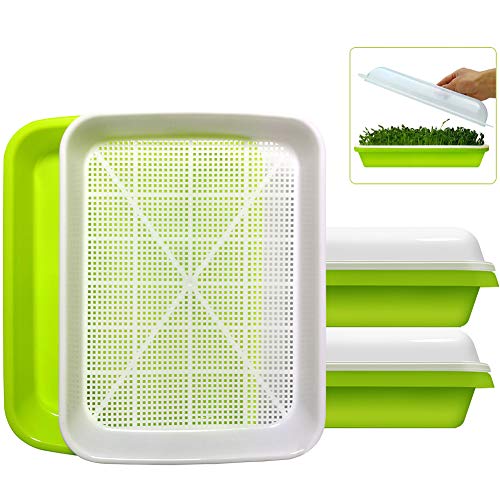
Best for a versatile, beginner-friendly microgreens station. This kit includes two large trays with humidity lids sized for larger harvests. The inner mesh promotes airflow, helping prevent root rot and promoting uniform germination. Aimed at growers who want a straightforward, repeatable process.
Who it’s best for: beginners or families seeking a guided setup. Why selected: strong emphasis on airflow and humidity management, plus a beginner-friendly guide.
Caution: lids should not go in the dishwasher, and proper cleaning between cycles is advised to maintain hygiene.
RMBHM Microgreens Growing Trays Kit

Best for a compact, soil-free indoor gardening setup. The 6-pack includes hemp fiber grow mats and six sturdy trays, designed for seeds that benefit from good water retention and airflow. It supports microgreens, wheatgrass, and seedlings with minimal mess.
Who it’s best for: indoor gardeners seeking a ready-to-use mat-based system. Why selected: hemp fiber mats provide simple soil-free growth and easy cleanup.
Caution: mats may require replacement after multiple uses to maintain germination efficiency.
Yield Lab 10×20 Inch Propagation Tray (No Drain Holes)

Best for bulk planting and propagation projects. This 10-pack of propagation trays with no-drain holes provides a sturdy base for dense microgreen setups, reducing spills and simplifying watering. Durable plastic supports repeated use for a budget-friendly, steady supply of trays.
Who it’s best for: growers needing a durable, no-drain option for consistent cycles. Why selected: emphasis on durability, reuse, and adaptation to various microgreen arrangements.
Caution: no-drain design requires careful watering to avoid over-saturation in dense plantings.
Buying Guide: Key Considerations For Microgreens Tray Purchases
What size should I choose? Consider your space and batch size. Smaller trays (roughly 5″ x 5″) are ideal for countertop setups and starter kits, while larger trays (around 13″ x 9″ or more) support bigger harvests and fewer refill cycles.
How important is airflow and humidity control? Trays with inner mesh, humidity domes, or clear lids help regulate moisture and oxygen, reducing mold risk and accelerating germination. Look for vented domes and breathable bottoms.
Is soil-free better than soil-based? Soil-free systems reduce mess and enable easy cleanup. They also simplify hydroponic-style setups and can improve seedling health when paired with proper drainage and water management.
What materials matter? Food-grade plastic (PP or BPA-free) is common and safe for food use. Clear lids help monitor progress, while durable trays withstand repeated use and washing.
Are there maintenance considerations? Choose trays with simple cleaning options; dishwasher-safe bottoms are a plus, though lids might require hand washing. Ensure thorough drying between cycles to prevent mold.
FAQ
- What makes a good microgreens tray set? Look for soil-free design, good airflow, moisture control, and easy cleaning.
- Can I reuse hemp fiber mats? Yes, after cleaning and drying, though they may need replacement after repeated use for optimal germination.
- Do I need lids for germination? Lids help maintain humidity to start seeds but should be removed or vented as plants grow to prevent mold.
- Which tray size is best for beginners? A small starter kit (around 5″ x 5″ trays) is typically easiest to manage and learn from.
- Are these trays dishwasher safe? Many parts are, but check product notes. Lids or certain components may require hand washing.
- How many trays should I start with? If you plan to grow weekly, a mix of 2–5 trays can sustain a steady microgreens supply while you learn.