Best Two Row Seed Planter: Top Picks for Efficient Row Planting
Answering the need for precise, low-effort seed placement, these two-row and multi-row seed planters help garden beds stay neat and productive. This guide highlights models suited for different gardeners—from casual plots to larger raised beds—so you can choose based on seed type versatility, ease of use, and row spacing. The top picks are organized to help you compare who each tool is best for and why it stands out.
Buyer snapshot table:
| Product | Best For | Notes |
|---|---|---|
| Chapin 8701B Garden Push Seeder Planter | Small to medium gardens; diverse seed types | 6 seed plates; 1.5 L hopper; zinc plow blade |
| John Deere 3 lb Garden Seeder | Prepared soil with easy seed-to-soil contact | 7 plates; adjustable row marker; rear wheel |
| Agri-Fab Push Garden Seeder | Versatile seed types; durable light frame | 7 plates; 3 lb hopper |
| CUTANGELAR Multi-Row Garden Seeder (3-row) | Raised beds and varied crops | 3-row option; adjustable spacing |
| AUTUMFLATGAO Hand Push Garden Seeder | Low-effort, senior-friendly use | Adjustable handle; rust-resistant design |
Chapin 8701B Garden Push Seeder Planter

The Chapin 8701B is designed for gardeners who need a flexible multi-seed system in a compact form. It supports up to 20 seed types across six interchangeable seed plates and uses a 1.5-liter hopper for continuous planting. The zinc plow blade helps create a consistent furrow, while cushioned handle grips reduce fatigue during long sessions. This model is best for small to mid-sized plots where users plant a mix of vegetables such as beans, carrots, lettuce, and peppers.
Who it’s best for: hobbyists with diverse seed plans and a preference for a traditional push-seeder approach. Why chosen: the combination of multiple seed plates and a durable steel frame offers broad seed compatibility and reliable row creation. Limitation: heavier use across large, dense plots may require more frequent refilling of the hopper.
John Deere 3 lb Garden Seeder
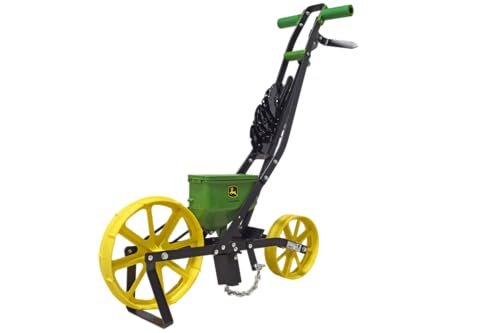
John Deere’s garden seeder focuses on efficient seed-to-soil contact and ease of use in prepared soil. It includes seven interchangeable seed plates and a wide rear wheel designed to help maintain straight rows. This setup supports up to 20 seed types, making it a strong option for gardeners who plant a mix of vegetables and need dependable, repeatable spacing.
Who it’s best for: gardeners who plant in well-prepared beds and want consistent distances with minimal back strain. Why chosen: the emphasis on seed-to-soil contact and a robust rear-wheel system supports uniform germination and tidy rows. Caution: performance relies on properly prepared soil; less optimal in rough or compacted ground.
Agri-Fab Push Garden Seeder

Agri-Fab offers a sturdy, lightweight alternative with a three-pound hopper and seven seed plates for versatility. Its push design aims to minimize back strain while enabling precise seed placement in cultivated soil areas. Best for gardeners who value a straightforward, durable tool and plan a range of crops—from radishes to corn—without complex setup.
Who it’s best for: users seeking a reliable, easy-to-operate seeder with broad seed compatibility. Why chosen: the durable construction and interchangeability provide dependable performance across seasons. Limitation: not the lightest option; longer sessions may feel heavier than purely plastic models.
CUTANGELAR Multi-Row Garden Seeder (3-row)

The CUTANGELAR multi-row seeder is designed for precision and versatility, offering a 3-row design with adjustable spacing. It supports even seed distribution for a wide range of crops, including cabbage and beans, and provides adjustable seed depth and row spacing. This model is particularly suitable for raised beds and plots requiring consistent, straight rows across multiple passes.
Who it’s best for: gardeners who plant in raised beds or need consistent spacing across several rows. Why chosen: multi-row capability and adjustable depth help achieve uniform germination. Caution: assembly and adjustment may require more time than single-row models.
AUTUMFLATGAO Hand Push Garden Seeder

AUTUMFLATGAO focuses on ergonomic design and durable construction for a back-friendly, walk-behind experience. It features a multi-angle adjustable handle to reduce bending and a rust-proof hopper for longer-term use. Best for: seniors or gardeners seeking a lightweight, user-friendly seeder that still handles multiple seed types. Why chosen: its ergonomic design and robust frame support easier long sessions. Limitation: may not offer as many seed plates as some larger models.
Acdesino Manual Push Seed Planter (2-Row)

Acdesino’s two-row model emphasizes adjustable multi-row spacing, a durable powder-coated frame, and a PC hopper. It offers precise seed output control with adjustable discharge, designed for vegetable planting across varied soil conditions. Best for: gardeners who want two rows with precise control over seed rate and spacing. Why chosen: clear focus on adjustable output and field-ready construction. Caution: some users may prefer more seed plate options for smaller seeds.
RJLCTH Seed Spacers Planting Tool
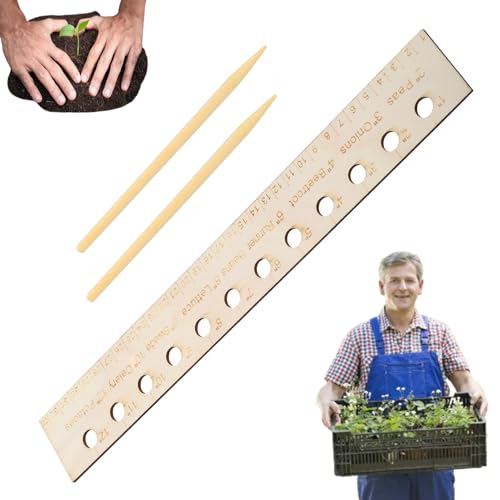
RJLCTH offers a seed spacers planting tool designed to improve row alignment and spacing with two wooden stakes. While primarily a planning accessory, it complements seed planters by enabling better row accuracy and organization. Best for: gardeners who want precise pre-marking to improve planting symmetry. Why chosen: solid wooden construction and easily adjustable spacing help ensure straight rows. Limitation: not a stand-alone seeder; used in conjunction with other planters.
Buying Guide: Key Purchase Considerations
- Seed compatibility: Look for models with multiple seed plates to accommodate your usual crops, from beans to carrots to leafy greens. More plates generally mean more versatility.
- Row spacing and depth: If you plant in raised beds or beds with tight spacing, prefer adjustable depth and spacing features. This helps prevent overcrowding and thinning later.
- Hopper capacity: Larger hoppers reduce refill frequency for big gardens. However, weigh against the weight and maneuverability of the tool.
- Ease of use: Ergonomic handles, smooth wheel movement, and straightforward operation minimize fatigue, especially for larger planting sessions.
- Durability: Rust-resistant hoppers and powder-coated frames extend life in outdoor conditions. Consider metal components for long-term use in challenging weather.
- Maintenance: Look for tools with simple maintenance requirements and accessible replacement parts, such as seed plates and plows.
- Portability: If you garden across multiple plots, choose lighter models or those with comfortable grips to move easily.
Frequently Asked Questions
- What is a two-row seed planter best used for?
– It helps plant two parallel rows at consistent spacing, improving organization and germination rates for crops like lettuce, radish, and beans. - Do these seed planters work on all soil types?
– Most models assume prepared, cultivated soil for best results; very rocky or compact ground may require additional prep or alternate methods. - Can I adjust seed depth and spacing easily?
– Many models offer adjustable plates and spacing configurations; some require manual calibration before use. - Which planter is easiest for beginners?
– Hand-push and lightweight aluminum-frame models with clear instructions and fewer components are typically easier for new users. - Is a higher hopper capacity worth it?
– Yes for large gardens to minimize refills, but consider portability and whether you’ll be planting in multiple plots. - Should I choose a multi-row model over a single-row option?
– Multi-row units save time when planting larger areas or varied crops, but single-row tools can be simpler and lighter for small plots.