Best Umbrella for Wind and Rain: Top Windproof Picks
Heavy winds and driving rain demand a reliable umbrella. This guide highlights five top windproof options that deliver sturdy construction, wind resistance, and practical features for everyday use, travel, or commuting. Each pick blends performance with portability and a user-friendly design. Whether you need a compact travel companion or an oversized canopy for protection in a storm, the selections below cover a range of budgets and needs. Read on to compare core features, canopy size, weight, and build quality to help you choose an umbrella that stays reliable when conditions worsen.
| Product | Brand | Notable Feature | Canopy Size |
|---|---|---|---|
| TUMELLA Windproof Travel Umbrella | TUMELLA | 9 fiberglass ribs, vented double canopy | Compact |
| Repel Windproof Travel Umbrella | Repel Umbrella | Withstands up to 85 MPH winds; auto open/close | Compact |
| G4Free 68 Inch Automatic Open Golf Umbrella | G4Free | 68″ canopy, double canopy, windproof | Oversize |
| ZOMAKE 62 Inch Golf Umbrella | ZOMAKE | 62″ canopy, double canopy vent, windproof | Oversize |
| QWB TUMAAOTU Inverted Umbrella | QWB | Inverted design, carabiner clip, reflective strips | 46″ |
TUMELLA Windproof Travel Umbrella

TUMELLA’s windproof travel umbrella emphasizes rugged durability and ease of use. It features nine fiberglass ribs and a vented double canopy designed to allow wind to pass through without flipping. The umbrella opens and closes automatically, enabling quick one-handed operation, which is convenient when carrying bags or holding onto children. The coating provides reliable water resistance, and the design employs Ultra-Flex 2025 tech to maintain shape under gusts. A lifetime replacement promise reinforces confidence in its long-term reliability, making it a strong option for travelers and daily commuters.
Repel Windproof Travel Umbrella

Repel’s windproof umbrella is engineered for extreme conditions with reinforced fiberglass ribs, a vented canopy, and durable fabric. It has undergone tests to withstand winds up to 85 MPH and resists flipping and breaking where others fail. The automatic open and close feature activates with a single push, and the ergonomic handle provides a secure grip. At under 1.1 lb, it folds to 11 inches for easy storage in bags, purses, or car doors. Quick-dry fabric helps keep you comfortable in wet weather during commutes, travel, or outdoor activities.
G4Free 68 Inch Automatic Open Golf Umbrella

The G4Free umbrella is designed for larger protection with a 68-inch canopy and a dual, vented canopy system. The outer fabric is ultra water resistant 210T pongee (polyester blend), and the frame uses fiberglass components to resist wind effectively. The automatic open mechanism makes deployment quick, while the double-canopy design creates a vent that allows wind to pass through, reducing the risk of inversion even in gusty weather. The all-black finish and comfortable EVA grip also suit professional or casual daily use.
ZOMAKE 62 Inch Windproof Golf Umbrella
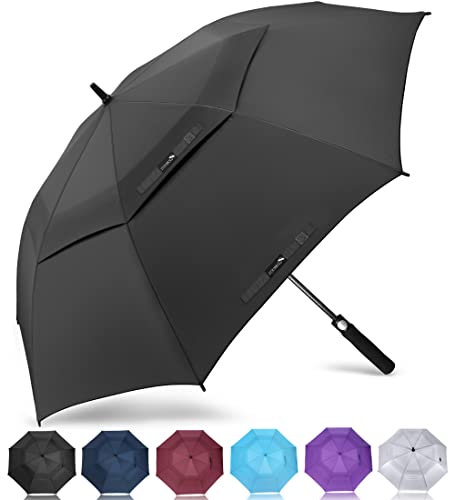
The ZOMAKE umbrella offers a substantial 62-inch canopy designed to cover 1–3 people, with a windproof, double-canopy structure to reduce wind pressure. The frame uses glass fibers for added stiffness and flexibility, while the inverted-feel is achieved with a practical arch. The EVA handle and automatic opening button provide comfortable, one-handed operation. Its tall profile and solid construction make it a reliable choice for golfers, travelers, and daily commuters exposed to gusty conditions.
QWB TUMAAOTU Inverted Umbrella

The QWB inverted umbrella features an inverted travel design that closes inside-out to keep the wet surface contained. A carabiner clip handle allows easy attachment to bags, purses, or belts for quick access. It includes 360° reflective strips for nighttime visibility and a 46-inch canopy suitable for city commutes and travel. The design reduces water drips onto clothes or car seats, and ten ribs contribute to a sturdy, wind-resistant profile. This umbrella emphasizes practicality and safety for daily use in variable weather.
Buying Guide
Wind Resistance And Canopy Design
Wind resistance depends on canopy construction and rib quality. Vented designs let wind pass through without flipping, while double-canopy systems break up gusts and reduce pressure on the fabric. Fiberglass ribs offer flexibility and strength, helping the frame recover after bending. When evaluating options, compare whether the canopy is vented, whether there is a double layer, and how the ribs are arranged. Umbrellas with higher-quality rib materials and reinforced joints typically hold up longer in heavy rain and wind.
Urban and travel use often benefits from an automatic open/close mechanism for quick deployment and compact storage. However, a robust locking mechanism and a comfortable handle also influence real-world performance. If you frequently navigate tight spaces or ride public transport, a lighter, compact model may be preferable, while a larger canopy provides better protection in gusty storms. The best windproof umbrella balances wind tolerance with ease of use and portability for your typical weather patterns.
Size, Weight And Portability
Canopy size determines how much coverage you get. Oversize options (around 62–68 inches) shield multiple people but may be bulkier to carry. Compact designs (under 12 inches folded) are easier to stash in a bag or car door pocket. Weight also matters for daily carry; models under 1.5 pounds are generally convenient for commuting. If you value travel convenience, prioritize a quick-fold design and a case that protects other items inside your bag from damp fabric.
For car owners, inverted designs can reduce interior mess by keeping water contained during closing, which is especially useful in parking lots or when entering vehicles after rain. Individuals who walk or bike in variable weather may appreciate reflective elements near the canopy edge for added safety during low light. Consider your typical outdoor routines to choose a size that offers adequate coverage without compromising mobility.
Materials, Ribs And Frame
Quality umbrellas use fiberglass or hybrid rib systems to resist bending in gusts. Fiberglass ribs tend to be more flexible than metal alternatives, allowing the canopy to flex without snapping. The frame’s joints should be robust and corrosion-resistant, with reinforced connectors at the hub. Fabric quality matters too; choose water-repellent, quick-drying fabrics like high-denier pongee, which offer durability and faster moisture dissipation to prevent water pooling on the canopy.
Inverted and automatic designs often emphasize frame integrity and durable locking systems. Look for reinforced tips, anti-slip handles, and reinforced corners where the canopy meets the ribs. A well-built umbrella remains functional after repeated gusts and occasional drops, reducing the need to replace it frequently. Your choice should align with your typical climate, whether you face strong coastal winds, urban gusts, or heavy spring rain.
Ease Of Use And Safety Features
One-handed operation is a common convenience for travelers and parents. Automatic open/close mechanisms simplify deployment, but the mechanism should feel reliable and not loosen with use. Safety features include slip-resistant handles, reflective edges for nighttime visibility, and secure locking systems at the joint to prevent sudden collapsing. If you walk at night or in low-light conditions, reflectivity and visible color choices can be practical improvements for safety.
Carrying an umbrella that is easy to store in a tight space reduces the risk of forgetting it. Inverted designs can help keep rain contained when entering cars or elevators, reducing water runoff. Consider how you plan to use the umbrella—commuting, golfing, or traveling—and prioritize a design that complements those activities while remaining comfortable to carry for extended periods.
Inverted Versus Traditional Designs
Inverted umbrellas close inside-out, keeping the wet side contained. This design minimizes dripping on floors and car interiors, a benefit for commuters and shoppers. Classic designs, on the other hand, tend to be lighter and simpler, which can be adequate for less demanding conditions. When comparing, weigh the convenience of inversion against potential added weight and price. If you frequently get in and out of vehicles, the inverted style can provide notable practical advantages.
Reflective accents, clip handles, and storage options are additional factors to consider. Inverted umbrellas often include features like carabiner clips or bag attachments to improve portability. Decide if these extras align with your daily routine and storage needs to maximize overall usability and satisfaction.
Care And Maintenance
Proper care extends umbrella life. After heavy rain, wipe the canopy to prevent mineral deposits from drying on the fabric. If the umbrella is exposed to salt air or coastal environments, rinse and dry to prevent corrosion and fabric degradation. Ensure the mechanism is lubricated as recommended by the manufacturer, and store the umbrella in a dry place away from direct sunlight, which can weaken fabrics over time. A quick inspection of ribs and joints after a windy day can catch minor issues before they become problems.