Best Drip Irrigation Valve Options for Precise Watering
Answer: If you need reliable inline shut-off valves to regulate water flow in 1/4″ and 1/2″ drip systems, these options offer tight control, easy installation, and durable construction for gardens, greenhouses, and containers. The best picks below suit different setups—compact home gardens, raised beds, and larger irrigation lines. This guide helps you compare features, compatibility, and installation considerations to choose the right valve for your system.
Here’s a quick buying summary of five strong choices, based on tubing size and intended use:
| Product | Brand | Best For | Tubing Size |
|---|---|---|---|
| NRWRTY 1/4 Inch Valves (25 Pack) | NRWRTY | Even flow control for small 1/4″ lines | 1/4″ |
| Gardrip 1/4″ Shut Off Valves (25 Pack) | Gardrip | Balanced flow in compact drip runs | 1/4″ |
| RedChili 1/2″ Valves (10 Pack) | RedChili | Precision control for medium to large lines | 1/2″ |
| WZFLRUA 1/2″ Valve Fittings (10) | WZFLRUA | Versatile inline connections for 1/2″ tubing | 1/2″ |
| Aoserge 20 Pcs 1/4″ Valves | Aoserge | Reliable 1/4″ flow control in mixed setups | 1/4″ |
NRWRTY 1/4 Inch Drip Irrigation Shut Off Valves
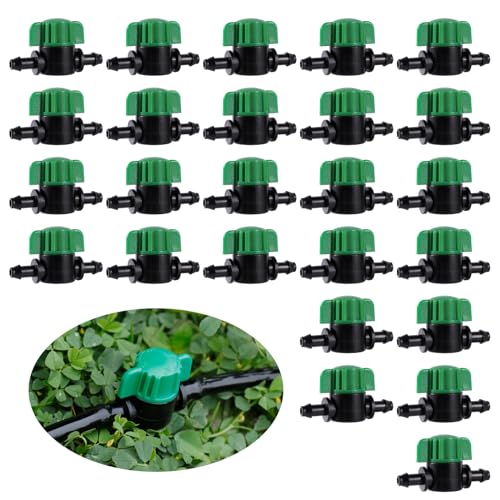
The NRWRTY 1/4 Inch valves come in a 25-pack set designed to regulate flow in 1/4″ drip lines. They are suitable for garden beds, greenhouses, patios, and small drip zones where even distribution is essential. The valves are made from durable plastics to resist rust and stand up to outdoor use. They connect easily to standard 1/4″ tubing and offer reliable shut-off capability for precise irrigation scheduling.
Best for: small, frequent irrigation zones such as container gardens or raised beds where you need tight control of each plant group. Limitations: check compatibility with your exact tubing ID and ensure proper seat seating to avoid leaks at the connection.
Gardrip 1/4″ Drip Irrigation Valve

The Gardrip 25-pack in-line shut-off valve is built to fit most 1/4″ drip tubing. It provides straightforward on/off control to balance water flow across a network, helping save water and reduce overwatering. The valve body is made from durable plastic designed for long-term outdoor use, with a simple one-piece construction that supports reliable performance.
Best for: general 1/4″ drip systems needing easy flow regulation. Limitations: verify tubing compatibility and ensure tight seating of the tubing onto the barbs to prevent leaks.
RedChili 10 Pack 1/2 Inch Irrigation Shut Off Valves

RedChili offers a 10-pack of 1/2″ shut-off valves designed to fit standard 1/2″ drip tubing. The top-cap twist provides straightforward flow adjustment, and the barbed ends ensure a secure, leak-tight connection. These valves are well-suited for mainline or branch lines in larger drip layouts, where precise control of water delivery matters most.
Best for: larger-diameter drip lines or when a dedicated valve is needed at a plant group. Limitations: ensure the tubing’s inner diameter matches 1/2″ fittings for a tight seal.
WZFLRUA 1/2 Inch Drip Irrigation Valve Fittings

The WZFLRUA set includes 10 in-line valve fittings designed for 1/2″ tubing. They emphasize durability with UV-resistant materials and a one-piece construction, which adds strength for outdoor use. These fittings help you customize a drip layout, repair sections, or extend runs without compromising flow.
Best for: flexible 1/2″ tubing configurations and layout customization. Limitations: confirm the inner diameter of your tubing matches the valve’s barb size for a tight seal.
Aoserge 20 Pcs 1/4″ Drip Irrigation Shut Off Valves

Aoserge provides a 20-piece set of 1/4″ inline shut-off valves with a precision barbed design for tight, leak-proof connections to standard 1/4″ tubing. The rugged UV-resistant construction targets residential and commercial drip systems, offering reliable flow control for patios, containers, and vineyards. It outperforms basic valves with durable materials and a smooth ball mechanism.
Best for: scalable 1/4″ drip layouts and long-term outdoor use. Limitations: verify tube ID and ensure a proper seal at the barb to prevent leaks.
Buying Guide: Drip Irrigation Valve Essentials
What tubing size do I need?
Valve compatibility depends on tubing diameter. Most common options are 1/4″ and 1/2″ drip lines. Always measure the tubing ID (inside diameter) before purchasing to ensure a snug fit and leak-free operation.
Metal vs plastic, and durability?
Plastic valves are lightweight and corrosion-resistant, ideal for long-term outdoor use. Look for UV-resistant plastics and one-piece construction when you want fewer leak points and easier maintenance.
How many valves should I buy?
Consider the size of your system and the number of zones you plan to control. A larger garden with several beds may require more valves for precise zoning, whereas a small container garden might be well served by a compact set.
Are inline shut-off valves easy to install?
Yes, most 1/4″ and 1/2″ inline valves install by pushing tubing onto barb ends until fully seated. Some models include lock nuts or anti-drag features to prevent disconnects under pressure. Always ensure a clean cut on tubing for a tight seal.
What are common limitations to watch for?
Leaks can occur if tubing isn’t fully seated, the wrong tubing ID is used, or fittings aren’t tightened properly. Compatibility with existing irrigation components (emitters, tees, manifolds) is also important for seamless operation.
Frequently Asked Questions
Q: Can I use these valves with hot weather or in greenhouse environments?
A: Most 1/4″ and 1/2″ drip valves are designed for outdoor use and can tolerate typical greenhouse conditions, but always verify UV resistance and material compatibility with your specific environment.
Q: How do I prevent leaks at the valve connections?
A: Ensure you cut tubing straight, insert fully onto the barb, and verify the tubing ID matches the valve size. Use extra clamps if recommended for high-pressure zones.
Q: Should I choose more valves for better control or fewer for simplicity?
A: More valves offer finer zoning and flow control but add complexity. Start with essential zones and expand as irrigation needs grow.
Q: Are there valves designed for mixed tubing sizes in the same system?
A: Some fittings accommodate different tubing sizes with adapters, but it’s best to keep consistent tubing sizes within a single zone to avoid fittings and leaks.
Q: How do I maintain these valves over time?
A: Periodically inspect connections for leaks, replace worn seals or barb fittings, and keep tubing clean from debris. Reseal joints if you notice any flow irregularities.
Buying tip: match valve size to your tubing, consider the number of zones you need, and prioritize UV-resistant, durable materials for outdoor use. This approach helps ensure efficient water use and reliable plant hydration across seasons.