Best Vertical Aeroponic Tower Garden Systems for Fresh Produce
For urban growers and homeowners aiming to maximize harvests in compact spaces, vertical aeroponic towers offer efficient water use, scalable design, and faster growth. This guide highlights five top options suited to different needs—from compact apartments to small backyards. Each product is evaluated for space efficiency, ease of use, and suitability for herbs, leafy greens, and small vegetables. Readers will learn which tower best fits beginners, how to compare features, and practical buying considerations to optimize yields in a compact footprint.
| Product | Brand | Layers / Pods | Best For | Notes |
|---|---|---|---|---|
| TIRUSS Vertical Hydroponic Grow Tower | TIRUSS | 9 layers, 36 pots | Home gardeners seeking high capacity in a single unit | Good water efficiency; faster growth potential |
| ALTO GARDEN GX Hydroponic Tower | ALTO GARDEN | 12+ layers (24 net pots) | Organic, farm-to-table produce, no monthly fees | Self-watering and self-lighting; robust construction |
| Tower Garden Flex Aeroponic Tower | Tower Garden | 5 standard grow pots (holds ~20 plants) | Starter setup with seed kit | Real Tower Garden system; includes seed starter items |
| KUCKGO Vertical Hydroponic Tower | KUCKGO | 6-layer, 30 pods | Indoor/outdoor flexible use; space-efficient | Smart water management; good for diverse crops |
| VEVOR Hydroponic Growing System | VEVOR | 6 tiers, 30 pods | Compact urban growing with energy control | Includes timer and water circulation features |
TIRUSS Vertical Hydroponic Grow Tower

The TIRUSS tower is a 9-layer system with 36 growing pots, designed for fruits, vegetables, and herbs. It emphasizes space efficiency and water recycling, aiming to reduce water usage while maintaining strong yields. Best for buyers who want a sizable, multi-crop setup in a relatively small footprint.
Who it’s best for: Home growers who want a high-capacity vertical system without a yard. Why selected: The 9-layer design balances pot count and footprint, and the advertised water-efficiency supports sustainable hydroponics.
Caution: Product data emphasize water efficiency and growth speed, but exact nutrient control requirements may vary by crop. Ensure you have a suitable reservoir and pump setup for your plants.
ALTO GARDEN GX Hydroponic Tower
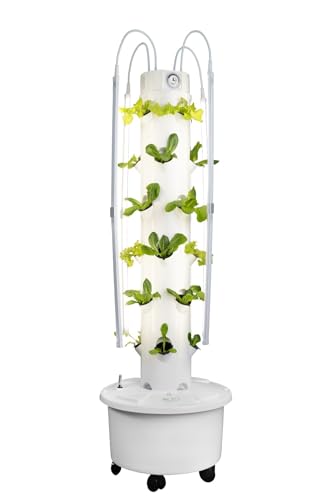
The ALTO GARDEN GX is a self-contained, self-watering and self-lighting system that uses a thick-walled design and 360-degree layers to maximize plant spacing and reduce leaks. It emphasizes organic, farm-to-table produce with no monthly subscription fees for full features. Best for growers who want a nearly plug-and-play experience with clean, contained construction.
Who it’s best for: Home cooks who value clean, garden-fresh produce with straightforward maintenance. Why selected: No hidden monthly fees and robust construction set it apart for long-term use.
Caution: Some buyers may prefer simpler or smaller kits; ensure the footprint fits your space given the multi-layer design.
Tower Garden Flex Aeroponic Tower

The Tower Garden Flex is a recognized aeroponic system designed for vertical growth with five standard pots, capable of supporting around 20 plants. Marketed as the real Tower Garden experience, it is suitable for beginners through intermediate growers who want a proven framework and starter growing kit.
Who it’s best for: Beginners who want a trusted, beginner-friendly setup with a provided seed starter kit. Why selected: Includes a complete starter package to accelerate initial growth, with a focus on user-friendly assembly.
Caution: The kit size is moderate; those aiming for very high plant counts may prefer larger multi-tier options.
KUCKGO Vertical Hydroponic Tower

The KUCKGO system offers a 6-layer, 30-pod arrangement designed for indoor or outdoor use. It emphasizes space efficiency and smart water management, making it a strong choice for growers needing a compact unit that still supports diverse crops such as herbs, tomatoes, and leafy greens.
Who it’s best for: Urban residents and apartment gardeners wanting a flexible, space-saving solution. Why selected: High pod count in a compact form with efficient water reuse.
Caution: The 30-pod configuration may require careful planning of plant selection to maximize space and airflow within the tower.
VEVOR Hydroponic Growing System

The VEVOR 30-pod system is a six-tier tower designed for efficient space use in kitchens, balconies, and small apartments. It includes a water pump and timer with a focus on energy-conscious operation, plus a 20-liter tank for extended growing cycles. Best for cost-conscious urban growers who still want dependable yields.
Who it’s best for: Small-space growers who want a balanced, budget-friendly option with programmable watering. Why selected: Combines space efficiency with a pump and timer for automated cycles.
Caution: Ensure the unit’s footprint matches your available area and that the pump and timer are compatible with your electrics and local power requirements.
Buying Guide
Space and layout: Measure your available area and choose a tower that fits vertically and horizontally. Look for multi-layer designs if you want higher plant counts without expanding floor space.
Water management: Prioritize systems with built-in reservoirs and reliable circulation to maximize water efficiency and root oxygenation. Timers help maintain consistent feeding schedules.
Growing goals: Decide which plants you’ll grow most—leafy greens, herbs, strawberries, or small vegetables—then pick a model with appropriate pod counts and spacing.
Maintenance and durability: Consider materials, ease of assembly, and whether the unit is designed for indoor or outdoor use. Self-contained towers reduce leaks and simplify cleanup.
Costs and accessories: Some systems include seed kits or starter pots; others might require separate purchases for lights or nutrients. Compare total ownership beyond the initial price.
FAQ
- What is a vertical aeroponic tower? A vertical system that grows plants with nutrient-rich mist circulated through multiple levels, saving space and often using less water than soil-based growing.
- What plants work best in these towers? Leafy greens (lettuce, kale, spinach), herbs (basil, mint), and compact vegetables (tomatoes, peppers) as well as berries like strawberries on some models.
- Do these towers require a lot of maintenance? Maintenance varies by system but typically includes monitoring water level, nutrient solution, and occasional cleaning of the reservoir and nozzles.
- Can these systems be used indoors? Yes, many models are designed for indoor use on patios, balconies, or kitchens, provided there is sufficient light if a grow light is not included.
- Is automation important? Timers and pumps help maintain consistent moisture and reduce manual work, especially for busy or space-constrained setups.
- How much space do they occupy? Most towers are tall and narrow; measure ceiling height, doorways, and available floor area to avoid clearance issues.