Best Water Circulation Pumps for Ponds: Clear Picks for Every Setup
Answering the question: which pond pump delivers reliable water movement, quiet operation, and easy maintenance? This guide highlights five dependable options that cover small to large ponds, waterfalls, and hydroponic features. Ideal buyers include koi keepers, fountain designers, backyard pond enthusiasts, and hydroponic hobbyists seeking steady flow with simple upkeep. Below is a quick summary table of the top picks and who they’re best for.
| Product | |||
|---|---|---|---|
| VIVOHOME Electric 100W 1600GPH | Koi ponds, waterfalls, and general circulation | ≈1600 GPH | Strong head height; durable epoxy-sealed motor |
| Aquascape Pond Powerhead 40W | Small to medium ponds; aeration and filtration support | ≈40 GPH | Low voltage efficiency; compact design |
| OYO WATER 2600 GPH Submersible | Medium to large ponds with waterfalls | ≈2600 GPH | Adjustable flow; robust copper motor |
| Hurmovae 600–1800 GPH | Ponds with adjustable needs; waterfalls | ≈600–1800 GPH | Quiet magnetic motor; 180° rotatable outlet |
| FREESEA 800GPH Small Pond Pump | Small ponds, fountains, and garden features | ≈800 GPH | Ultra-quiet operation; easy disassembly |
Note: Flow rates are nominal and depend on lift height, piping, and local conditions. The picks below are organized to help you compare by purpose, noise level, and maintenance needs.
VIVOHOME 100W Submersible Pump

Best for koi ponds and multi-feature water displays. The VIVOHOME model delivers up to 1600 GPH with a maximum lift of about 15 feet, making it versatile for waterfalls, fountains, and hydroponic setups. It uses an epoxy-sealed ceramic motor shaft and silicon carbide drive ring, which helps reduce wear and extend service life. The oil-free, magnetic drive design contributes to a quieter operation and cleaner running water. This pump is well-suited for buyers prioritizing strong circulation while keeping energy use reasonable.
Why choose this: It balances power with reliability. Suitable for medium to larger ponds that require consistent turnover and good aeration. A potential limitation: higher flow can still require careful placement to prevent splash or turbulence if you’re aiming for a very calm pond surface.
Aquascape Pond Powerhead Circulation Pump

Best for enhancing water movement and surface agitation in smaller settings. The Aquascape unit uses a low-voltage 40-watt motor and is designed to be energy-efficient while moving water to boost filtration and aeration. Its compact form makes it easy to install in existing features and tight spaces. It’s a good choice for users who want to improve water quality with minimal energy use and a straightforward setup. Limitation: lower maximum flow means it’s not ideal for large ponds or heavy waterfall applications.
OYO WATER Outdoor 1800Gph Pump
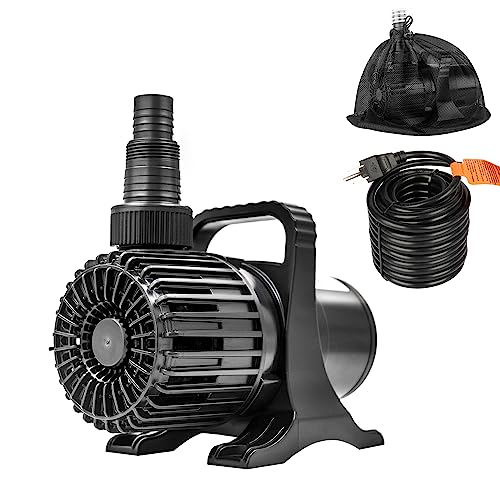
Best for flexible outdoor installations where long cord reach matters. The OYO WATER unit is listed as 1800 GPH with a 32.8-foot cord, offering a practical option for larger ponds or setups where the pump needs to sit away from the feature. It includes a mesh bag to help minimize debris intake, which supports easier maintenance. Choose this if you need a more forgiving installation distance and quieter operation under load. Caution: ensure compatible plumbing fittings to manage flow and head height effectively.
Hurmovae 600–1800 GPH Submersible Pump

Best for adjustable flow needs in ponds with waterfalls or fountains. This pump offers a wide 600–1800 GPH range and a 13-foot lift, with a front-mounted knob to dial flow precisely. The 180° rotatable outlet helps direct water for waterfalls or streams, and the IPX8 waterproof seal plus epoxy resin contributes to safe, continuous use. It’s well-suited for users who want fine control over water movement. Limitation: higher lift settings may reduce flow; plan placement to maintain effective circulation without overworking the pump.
FREESEA 800gph Small Pond Pump

Best for compact ponds or decorative water features requiring quiet operation. The FREESEA model delivers about 800 GPH with a claimed 20 dB ultra-quiet noise level and a 10-foot lift. It emphasizes 1-minute tool-free disassembly and dry-burn protection, which supports quick maintenance and safer operation. Choose this if you want a low-profile, easy-to-clean pump for a small pond or fountain. Caution: real-world noise and vibration can vary with installation and water conditions, so listen for any unusual sounds after setup.
Buying Guide: How To Choose A Pond Circulation Pump
- Flow needs: Match GPH to pond size, height, and downstream features. Larger ponds and waterfalls typically require 1500–3000+ GPH, while small decorative ponds may need 800–1000 GPH.
- Lift height: Consider the maximum head the pump must push water against. A higher lift reduces available flow; plan for the tallest point in your setup.
- Energy use and noise: Look for low-wattage, oil-free magnetic drives for efficiency and quieter operation, especially for indoor or frequently used water features.
- Durability and materials: Sealed motors, ceramic shafts, and corrosion-resistant components extend life in pond environments with water exposure and debris.
- Maintenance features: Removable housings, easy debris filtration, and dry-run or thermal protection reduce downtime and prevent damage.
- Installation flexibility: Rotatable outlets, longer cords, and compact forms help with placement in tight spaces and varied pond shapes.
- Debris management: Some models include mesh bags or filters to reduce clogging; consider your pond’s plant and leaf load when choosing.
Frequently Asked Questions
- What size pond pump do I need for a 1000-gallon pond?
– A pump around 800–1800 GPH is typically adequate for turnover, depending on lift height and desired filtration. For waterfalls or higher elevations, lean toward higher GPH to compensate for head loss. - Is a submersible pump better than external for ponds?
– Submersible pumps are easier to install and quieter in many configurations. External pumps can be more durable for large, permanent installations but require filtration and plumbing considerations. - How quiet should pond pumps be?
– Look for noise ratings in the 20–40 dB range for most residential ponds. Ultra-quiet models are preferable near living spaces or indoor features. - Do I need a pump with a filter bag?
– A filter bag helps prevent large debris from entering the pump, reducing clogs and wear, especially in ponds with lots of leaves or plant matter. - Can I run a pond pump year-round?
– Many pumps are designed for continuous operation, but ensure a thermal protection feature and appropriate power supply for cold-weather climates.