Best Water Pumps for Field Irrigation and Cleanup
Finding a reliable water pump for fieldwork means balancing power, portability, and durability. This guide highlights five Amazon options that cover backpack sprayers, jet pumps, trash pumps, and gas-powered transfer pumps—each suited for field irrigation, drainage, and remote operations. Read on to compare capabilities, including lift, flow, and practicality in typical field scenarios.
| Product | Brand | Type | Key Feature |
|---|---|---|---|
| FIELD KING Backpack Sprayer | Field King | Backpack Sprayer | Internal No Leak Pump; up to 150 PSI |
| VEVOR Jet Pump | VEVOR | Shallow Well Jet Pump | 164 ft max head; 66 GPM |
| LTIGOAW Trash Water Pump | LTIGOAW | Gas-Powered Trash Pump | 1.6 HP; handles solids |
| Marsyyds 3-Inch Gas Pump | Marsyyds | Gas-Powered Water Pump | 7.5 HP; 2118 ft³/h flow |
| Eapmic Gas Water Transfer Pump | Eapmic | Gas-Powered Transfer Pump | 60 m³/h; 3″ inlet/outlet |
The following profiles present objective, feature-based overviews to help you choose the right pump for field tasks such as irrigation, drainage, pond transfer, or emergency water movement. Each section includes a quick rundown of practical use cases and constraints.
FIELD KING Backpack Sprayer
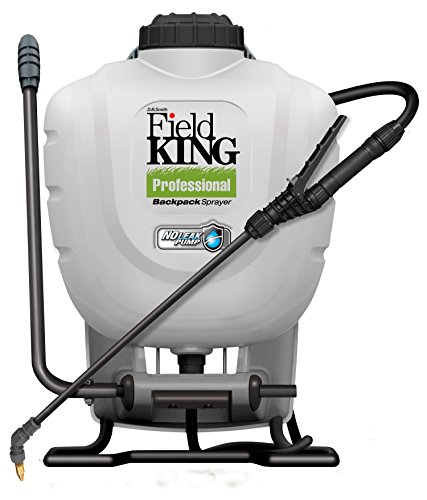
The FIELD KING 190328 combines a comfortable carrier with a high-quality internal piston pump that can deliver up to 150 PSI. Its internal no-leak design reduces chemical drips along the back, improving operator safety and mess management in field applications. The system includes a 21-inch poly wand with Viton seals, enabling compatibility with wettable powders and liquids for a broad range of spraying tasks. A premium, lockable shut-off with brass components and an inline filter supports reliable operation in variable field conditions. This model can substitute for separate pumping and spraying steps, streamlining weed management, soil amendment, and foliar applications.
Use cases: field crop spraying, pest control in orchards, weed management on large plots, and spot-treatment tasks requiring consistent pressure. Consider the weight and fit when carrying long hours in the field. The 150 PSI capability provides a strong spray jet for target areas, though fine mist settings may require careful nozzle selection and technique. Maintenance focuses on keeping seals and fittings clean and ensuring the shut-off remains smooth and leak-free.
ECO-WORTHY 33-Series Diaphragm Pump
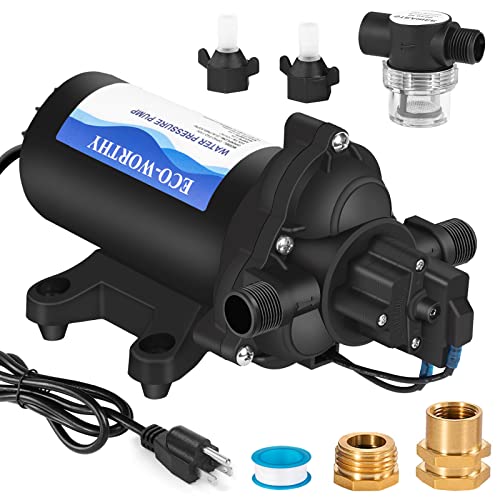
The ECO-WORTHY 33-Series is a 110V AC diaphragm pump designed for garden and irrigation use with a 4.0 GPM flow. It activates at about 50 PSI, making it suitable for on-demand field dispensing without relying on a vehicle battery. A Smart Pressure Switch starts and stops the pump automatically as water is opened and closed, reducing energy waste. The unit includes an adjustable pressure range (45-70 PSI) and self-priming capability up to 9.8 feet, with a maximum lift to about 148 feet. Thermal overload protection helps protect the motor during extended field sessions. This pump is well-suited for remote irrigation setups adjacent to a powered water source or temporary field stations.
Field considerations: reliable self-priming is ideal for pumping from shallow stock tanks and gravity-fed reservoirs. Quiet operation and automatic switching improve field usability, while the 50 PSI threshold emphasizes practical pressure for garden lines and small sprinkler fixtures. It does require a stable AC power source or a generator for field deployments, which can limit mobility but strengthens steady output for longer tasks.
VEVOR 115V Shallow Well Jet Pump

VEVOR’s shallow well jet pump is a heavy-duty option designed for field irrigation with practical lift and flow. It features a 1 HP motor capable of lifting water up to 164 feet and delivering up to 66 GPM. The smart pressure switch automatically turns the pump on or off as water usage changes, maintaining stability in fluctuating irrigation demands. The unit is built with a cast-iron body and includes a simple installation process to connect inlet and outlet piping. A pressure gauge is recommended for precise pressure management but is not included with the standard package.
Field considerations: high head and solid flow make this pump ideal for wells, ponds, or remote tanks supplying large garden plots or small pastures. The trade-offs include a larger footprint and the need for a stable power source or dependable generator. Priming is straightforward, but regular maintenance of seals and the intake screen will help prevent clogging from debris in field water sources.
LTIGOAW 1.5-Inch Trash Water Pump

The LTIGOAW 1.5-Inch Trash Water Pump is a gas-powered transfer pump designed for rugged field tasks. Its durable construction uses a combination of polished aluminum and high-impact plastic to resist handling and weather exposure. A robust engine delivers about 1.6 HP, enabling efficient water transfer with a flow of roughly 15 m³/h (approximately 530 ft³/h) and a lift capable of 28 meters (about 91.9 feet). This model supports moving water from ponds, irrigation ditches, or temporary storage to field beds, while tolerating minor solids in the intake stream.
Field considerations: gas-powered operation offers independence from electrical grids, which is valuable in remote fields. The pump’s efficiency makes it suitable for drainage tasks or moving larger volumes of water quickly. However, fuel management, noise, and emission considerations should be weighed in proximity to crops, livestock, or worker comfort. Regular inspection of seals, fuel lines, and carburetor components helps maintain long-term performance in field environments.
Marsyyds 3-Inch Gas-Powered Pump

The Marsyyds 3-Inch Gas-Powered Water Pump provides substantial capacity for field drainage and cleaning tasks. The unit uses a 210cc, 7.5 HP OHV engine and a durable aluminum alloy pump body with a sturdy frame, delivering up to 2118.88 ft³/h of flow and a maximum lift around 91.86 feet. The engine speed reaches 3600 RPM for efficient pumping, and the design emphasizes wear resistance and long service life with corrosion-resistant components. This pump is appropriate for heavy-duty field operations such as irrigation line clearing, pond draining, or flood mitigation where high-volume transfer is required.
Field considerations: this is a higher-capacity, all-purpose pump that handles field debris and demanding drainage. The trade-off is higher fuel use and operational noise, so safety precautions and proper positioning are important. Regular maintenance of carburetor, spark plug, and fuel system will support reliable performance across multiple field seasons.
Eapmic Gas Water Transfer Pump

The Eapmic gas-powered transfer pump is designed for field pumping tasks including garden watering, pool drainage, and general drainage requirements. It features a 3-inch inlet/outlet and a commercial-grade 7.5 HP engine delivering up to 60 m³/h (approximately 60,000 liters per hour) with a maximum head around 28 meters (91.9 feet). The pump’s robust aluminum construction supports durability in rough field conditions. Its semi-trash design helps handle moderate debris without frequent clogging, making it suitable for temporary field installations where power access is limited.
Field considerations: portability favors shorter moveable operations, and this unit shines in remote sites. Expect higher fuel consumption than electric models, so plan for refueling logistics. The 3-inch size and solid head provide a good balance between high volume and manageable weight for occasional field deployments.
Buying Guide: Key Purchase Considerations For Field Water Pumps
- Power source: Evaluate electric vs gasoline. Electric pumps offer cleaner operation and consistent power, while gas-powered units excel in remote locations without reliable electricity.
- Flow vs. head: For field irrigation, prioritize a pump with adequate flow (GPM) and sufficient head (feet or meters) to reach elevated zones or distant water sources.
- Solid handling: If you anticipate debris, choose submersible or semi-trash designs with appropriate intake screens and robust seals.
- Portability and重量: Field work often requires moving pumps between sites. Compare weight, handle design, and frame durability to minimize fatigue.
- Durability: Look for cast iron or aluminum bodies, sealed bearings, and corrosion-resistant components for longer field lifespans.
- Maintenance: Check accessibility of seals, impellers, carburetors, and filters. Regular maintenance reduces downtime during critical field tasks.
- Safety: For gas engines, ensure proper ventilation, fuel handling, and protective guards on moving parts. For high PSI electric sprayers, wear appropriate PPE.
- Prime and priming: Some field pumps require manual priming or specific priming procedures. Follow manufacturer instructions to avoid dry running and damage.
- Noise and emissions: Gas-powered pumps generate more noise and exhaust; plan site placement away from workers and crops where feasible.
When selecting among these options, align the pump’s specifications with your typical field tasks: watering large plots, moving water between ponds and tanks, clearing drainage paths, or supporting portable irrigation systems. A combination of a high-flow electric option for stationary setups and a robust gas-powered unit for remote sites often provides the best overall coverage for field operations.