Best Watermelon Red Crape Myrtle Trees for Bold Gardens
Answering the question for gardeners seeking vivid watermelon red blooms: these crape myrtle trees are ideal for adding dramatic color to small yards, privacy borders, or focal features in landscapes. The top picks below suit different garden sizes and climate needs, from compact dwarfs to tall shade trees. This guide highlights who each tree is best for, why it stands out, and any limitations to consider before planting. If you’re a busy homeowner wanting long-lasting summer color or a privacy-minded spacer, these selections fit a range of goals.
| Product | Mature Size | |
|---|---|---|
| Tonto Crape Myrtle | 8–10 ft tall and wide | Small gardens; privacy hedges |
| Tuscarora Crape Myrtle | 25 ft tall & 20 ft wide | Large landscapes; privacy screens |
| Scarlet Red Crape Myrtle Tree | 14–20″ tall (live plant) | Instant color in containers or beds |
| Elizabethanne Red Passion | 20 ft tall & 15 ft wide | Statement focal points; showy fall color |
| Black Diamond Best Red | 18–24″ tall (live plant) | Bold red blooms with dramatic foliage backdrop |
Tonto Crape Myrtle: Vibrant Watermelon Red Blooming Dwarf Tree

Best for: gardeners with limited space or those wanting a compact privacy hedge. The Mature Size indicates an 8–10 ft height and width, making it suitable for small yards and foundation plantings. The dark watermelon red blooms contrast with dark green foliage, delivering a dramatic color display from summer into fall. This variety is noted for very fast growth, helping establish a thick, bushy presence quickly. A potential limitation is its size ceiling—not ideal for those seeking a tall shade tree. Select this when you want a low-maintenance, high-impact accent that doesn’t overwhelm a tight space.
Tuscarora Crape Myrtle: Watermelon Red Blooms and Strong Hardiness

Best for: large landscapes or privacy screens where height matters. This cultivar grows to about 25 ft tall and 20 ft wide, providing substantial vertical and horizontal presence. It features dense clusters of dark watermelon red blooms that persist from late spring through fall, offering months of color. It’s a strong choice for eye-catching focal trees in yards or along property lines. Consider that its size requires ample space and proper planning for root systems and nearby structures. If you want a show-stopper that doubles as a privacy screen, choose Tuscarora.
Scarlet Red Crape Myrtle Tree/Shrub

Best for: gardeners seeking immediate, striking color in a manageable size. This plant is listed as approximately 14–20″ tall in a gallon pot, making it an ideal starter specimen for containers or small beds. The flowers are described as brilliant scarlet red, blooming from early summer through fall. It’s a fast-growing option for impatient gardeners looking for quick color. A limitation is the smaller initial size, which means it will require more time to achieve a full canopy. Use this when you want rapid color at a lower cost or as a seasonal container centerpiece.
6 Pack Red Flowering Crape Myrtle Trees
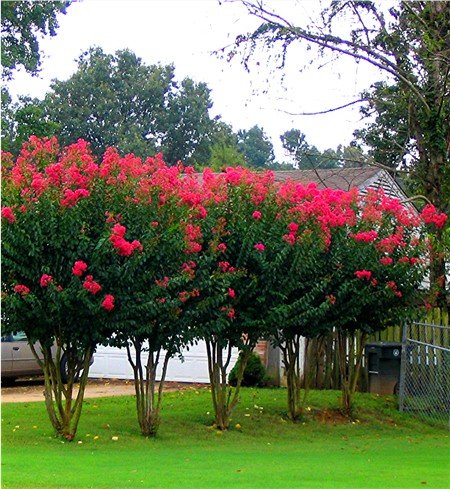
Best for: southern climates seeking extended color with multiple plants for a larger display or privacy row. This pack emphasizes an extended bloom period with vibrant red blooms throughout the summer. It’s marketed toward regions well-suited to southern conditions and notes growth to 20+ feet tall, offering a sense of maturity in groups. Consider that planting a six-pack means planning for spacing and eventual canopy overlap; it’s ideal for creating a cohesive red-flowering hedge or screen over several seasons. Choose this if you want multiple plants to establish a wider, more uniform border.
Black Diamond Best Red Crape Myrtle
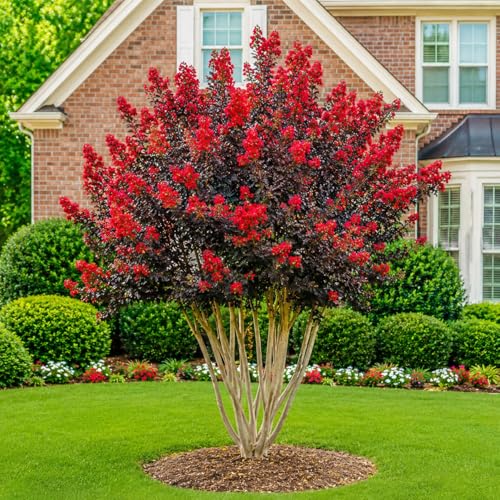
Best for: gardeners who want dramatic foliage as a backdrop to red blooms. The description highlights near-black burgundy leaves that retain deep color through the season, enhancing the red flower clusters. The plant ships as a small 18–24″ specimen, offering an affordable way to establish color in smaller spaces while awaiting more mature flowering. A caution is that the plant will need time to grow into a fuller canopy; it’s best for patients who plan to evolve a striking, contrasting landscape feature over time. This is the choice for dramatic visual impact when matched with vivid red blooms.
Buying Guide
What size fits your space?
Compact dwarf varieties are ideal for small plots, entryways, or containers. Larger trees work well for shade, privacy screens, and as landscape anchors. Measure available height and width, and consider mature size when planting near structures, sidewalks, or underground utilities.
How long do you want constant color?
Crape myrtles bloom from summer into fall, with some varieties offering longer flowering windows. If you want extended color, prefer cultivars noted for prolonged bloom periods and heavy bloom clusters.
What climate or soil matters?
Most watermelon-red selections thrive in warm climates (often southern and coastal regions). Soil preferences vary, but well-drained soil is generally important. If your soil is heavy clay or poorly drained, amend or choose a cultivar known for tolerance.
Maintenance and care
Consider pruning needs, drought tolerance, and disease resistance. Some varieties are fast-growing and may require more frequent shaping. For urban or container planting, ensure adequate root space and sun exposure for best bloom production.
Landscape goals
Choose based on whether you need a focal point, a border hedge, or an ornamental tree. Dwarfs work well near patios; larger trees provide shade and privacy. Pair with contrasting foliage or bloom colors to maximize visual impact.
FAQ
- Do watermelon red crape myrtles require a lot of sun?
Yes. Most bloom heavy varieties perform best in full sun, which supports robust flowering and foliage color. - Are these trees suitable for containers?
Compact dwarfs and some potted selections can thrive in large containers with proper drainage and regular watering. - When should I prune crape myrtles?
Pruning is typically done after blooming to maintain shape, but avoid heavy pruning that reduces next season’s bloom. - Will these plants attract pollinators?
Yes. Red blooms are attractive to pollinators such as butterflies and bees when grown in sunny locations. - Which variety is best for a tall privacy screen?
Tuscarora Crape Myrtle, with its tall growth habit, is best for creating a vertical privacy barrier. - Do these plants require special soil amendments?
Most prefer well-drained soil; add compost or organic matter if drainage is poor or soil fertility is low.