Best Weed Killer for Bindweed: Effective Solutions for a Weed-Free Garden
Bindweed is a persistent, sprawling weed that can invade lawns, garden beds, and cracks in hardscapes. Controlling it often requires products that target broadleaf weeds while protecting desired plants. The following review highlights five widely available options, focusing on active ingredients, application sites, and practical use. Each selection is evaluated for effectiveness against common broadleaf species and its suitability for different outdoor settings in American landscapes. Use this guide to compare formulations, pros and cons, and best-use scenarios for bindweed control.
| Product | Brand | Typical Use | Key Feature |
|---|---|---|---|
| Southern Ag Amine 2,4-D WEED KILLER, 32oz | Southern Ag | Turf, pastures, rangeland, ditch banks, fences | Low use rate; broadleaf and woody plant control |
| Spectracide Weed Stop For Lawns Plus Crabgrass Killer, 1 Gallon | Spectracide | Lawns and ornamental areas | Kills 470+ weed types; quick visible results |
| Roundup Weed and Grass Killer 4 With Pump N Go | Roundup | Around beds, trees, sidewalks, driveways | Kills weeds to the root; rapid rainfast time |
| BASF Drive XLR8 Crabgrass Killer for Lawn & Turf | BASF | Lawn and turf areas | Post-emergent, up to 30 days residual; broad spectrum |
| Roundup Dual Action Weed & Grass Killer Plus 4 Month Preventer | Roundup | Cracks, crevices, landscapes, hardscapes | Kills existing weeds and prevents new growth for months |
Southern Ag Amine 2,4-D Weed Killer, 32oz
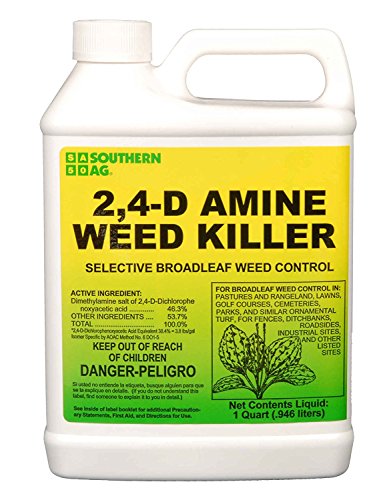
The Southern Ag Amine 2,4-D Weed Killer uses a 2,4-D amine formulation designed to target broadleaf weeds commonly found in turf and non-crop areas. It is described as a low, economical use rate product, with application rates ranging from 1 to 4 pints per acre. This makes it suitable for large lawns, turf areas, and marginal lands where bindweed and other broadleaf species emerge. The product is marketed for use in turf, pastures, rangeland, ditch banks, and fence lines, offering a flexible application window for various outdoor settings. For bindweed, apply during active growth and follow label directions regarding mixing and timing to maximize control while protecting desirable grasses. Always avoid overly damaged or stressed turf when applying in ornamental areas.
- Low use rate: 1–4 pints per acre
- Kills many broadleaf weeds and some woody plants
- Suitable for turf, pastures, rangeland, ditch banks, and fence lines
Spectracide Weed Stop For Lawns Plus Crabgrass Killer

Spectracide Weed Stop For Lawns Plus Crabgrass Killer is a ready-to-use formula designed to protect established lawns while eliminating weeds. It is advertised to deliver visible results in as little as 5 hours and targets a broad spectrum—up to 470 weed types—listed on the product label. This includes common broadleaf species such as dandelion, chickweed, and clover, along with grassy weeds like crabgrass and yellow nutsedge. The product is formulated to kill weeds without harming most lawn grasses when used as directed, making it a practical option for routine lawn maintenance and selective weed control in landscaped areas.
- Kills 470+ weed types when applied as directed
- Visible results in about 5 hours
- Selective to lawns; can be used around ornamentals if label allows
Roundup Weed And Grass Killer 4 With Pump N Go

Roundup Weed And Grass Killer 4 is a glyphosate-based formula designed to kill weeds and grasses to the root. It features a Pump N Go sprayer for easy application on hard-to-reach areas such as driveways, mulch beds, and around trees. The product boasts a rainfast period of about 30 minutes and provides visible results within hours. It allows for replanting after application—typically 1 to 30 days, depending on the crop and usage instructions. This broad-spectrum option is effective against persistent weeds, including bindweed when applied correctly and repeatedly on actively growing plants.
- Kills weeds to the root
- Rainfast in 30 minutes; visible results in hours
- Replanting allowed 1–30 days after application
BASF Drive XLR8 Crabgrass Killer for Lawn & Turf

BASF Drive XLR8 Crabgrass Killer for Lawn & Turf is a post-emergent herbicide with quinclorac as its active ingredient. The product is described as a water-based formulation that promotes rapid uptake by treated plants. It offers up to 30 days of residual control, helping keep turf free from grasses and broadleaf weeds for a longer period and reducing the frequency of applications. It is designed to target a broad range of weeds, including crabgrass and several broadleaf species such as bindweed, clover, dandelion, and horseweed, making it a potent option for mixed weed challenges in lawns and turf areas.
- Post-emergent, with up to 30 days residual control
- Rainfast in less than an hour
- Broad-spectrum control including bindweed, clover, dandelion
Roundup Dual Action Weed & Grass Killer Plus 4 Month Preventer

Roundup Dual Action Weed & Grass Killer Plus 4 Month Preventer combines a fast-acting weed killer with a long-lasting preventive effect. It claims to kill existing weeds and grass to the root while providing up to four months of weed prevention. The product is rainproof in about 30 minutes and typically shows results within 6 hours. It is designed for application on hardscapes, landscapes, cracks and crevices in driveways and sidewalks, and around the bases of established plants, shrubs, or trees. This makes it a practical option for long-term weed management in high-traffic or maintenance-heavy areas.
- Kills existing weeds and provides up to 4 months of prevention
- Rainfast in 30 minutes; visible results in hours
- Suitable for hardscapes, cracks, and base of established plants
Buying Guide
Key purchase considerations
When selecting a weed killer for bindweed, consider the weed’s location, growth habit, and the presence of desirable plants nearby. Glyphosate-based products offer non-selective, broad-spectrum results but may harm any nearby vegetation. Selective broadleaf herbicides using ingredients like 2,4-D are often better for lawns and ornamentals but may require multiple applications for perennial bindweed. Post-emergent formulas act on actively growing plants, while pre-emergents prevent new growth. Look for products with clear application directions, safety guidelines for children and pets, and weather-related usage notes to maximize effectiveness and minimize damage to desirable vegetation.
Site and plant safety
Evaluate the target site: lawns, flower beds, borders, or hardscapes. For lawns, prioritize products labeled as safe for turf or with minimal phytotoxicity to grasses. In ornamental beds or around trees, select formulations that limit root uptake by non-target plants. Always test on a small area first if label allowances permit. Follow protective equipment recommendations and avoid mixing with incompatible products. In pet- and child-friendly spaces, consider using pet-safe options or practicing thorough reentry intervals where noted on the label.
Active ingredients and mode of action
Different actives address bindweed through varying mechanisms. 2,4-D acts as a systemic broadleaf herbicide, effective on many annual and some perennial broadleaf weeds. Glyphosate-based products kill most plants by systemic translocation to roots, which can be suitable for spot treatment and hardscape areas but may affect nearby vegetation. Quinclorac-based products target grassy weeds such as crabgrass while providing broader broadleaf control in many mixes. Understanding these modes helps match a product to your weed spectrum and tolerance for collateral damage in the landscape.
Application timing and residual control
Apply during active growth for best results, as bindweed typically responds when moisture and temperatures favor vegetative growth. Some products offer residual control that reduces future weed emergence, while others require reapplication after a set period. Weather conditions, such as rain forecasts and wind drift, influence efficacy and safety; plan applications for calm, dry days and follow label guidance on interval and reentry times. Consider whether you need immediate knockdown or longer-term suppression when choosing between a fast-acting herbicide and a product with extended residual control.
Practical usage scenarios
For lawn-focused control, products labeled for turf and with selective broadleaf action are preferable to minimize turf injury. In garden beds or around foundation plantings, non-selective products with careful, spot-targeted application can be effective yet require careful timing to avoid affecting desirable ornamentals. In hardscape applications, formulations designed for gravel, cracks, and driveways with quick rainfastness are advantageous. A multi-product approach—using a fast-acting herbicide for initial knockdown and a residual preventative for ongoing suppression—can be a strategic way to manage bindweed over several growing seasons.