Best Wood Raised Garden Bed Kits for Easy Backyard Planting
Wood raised garden bed kits offer durable, attractive planting solutions for patios, backyards, and balconies. This guide highlights five top options, detailing who each is best for and why. Whether you’re growing vegetables, herbs, or flowers, these kits simplify setup, improve drainage, and help organize planting zones for tidy, productive spaces.
| Product | Size / Depth | Material Type | Best For | Why Pick |
|---|---|---|---|---|
| SPECRAFT 8×4 Ft Wood Raised Garden Bed | 8′ x 4′ x 15″ | Wood; open-base design | Large-space gardens; vegetable beds | Very spacious, excellent drainage, quick assembly |
| Yaheetech 8×2ft Divisible Garden Bed | 95″ x 25″ x 11″ | Natural wood; divisible sections | Budding veggie/herb areas on patios | Two compartments; easy to separate or merge |
| Yaheetech 8×4ft Divisible Garden Bed | 93″ x 48″ x 10″ | Solid wood; divider option | Moderate-to-large plots; mixed plant types | Divisible design with strong stability |
| Crownland 8ft Raised Garden Bed | 96″ x 24″ x 10″ | Solid fir wood | All-season outdoor gardens | Natural wood look; durable and roomy |
| Infinite Cedar Select Cedar Raised Garden Bed | 4′ x 8′ x 17.5″ | Western red cedar | Long-lasting, large perimeter beds | Naturally weather-resistant cedar; easy assembly |
Introduction
Best wood raised garden bed kits provide sturdy frames, easy assembly, and durable materials for American gardens. The top picks below are chosen for different buyer needs: compact patios, modular layouts, larger backyard plots, and long-lasting cedar construction. The buyers most likely to benefit include first-time gardeners seeking straightforward assembly, hobbyists wanting flexible layouts, and those aiming for heirloom-quality wood that lasts for years.
SPECRAFT 8×4 Ft Wood Raised Garden Bed

Best For: Gardeners needing ample growing space for vegetables, herbs, and flowers. The large 8×4 footprint and 15-inch depth accommodate extensive root systems and larger plant varieties. Selected for its open-base design that promotes drainage and healthy roots.
Why It Was Selected: The bed’s generous planting area supports diverse crops, and the central division aids organization. The easy, tool-free assembly makes it suitable for beginners and experienced growers alike.
Caution: The open-base design requires careful placement to avoid ground moisture buildup in very damp climates.
Yaheetech 8×2ft Divisible Garden Bed

Best For: Small patios or balcony gardens where space is limited. The divisible design lets you separate crops or merge sections as needed.
Why It Was Selected: The two growing areas provide planting versatility, and the simple assembly uses heavy-duty screws for stable construction.
Caution: The shape is long and narrow; place in a wind-sheltered spot to reduce wobble on breezy days.
Yaheetech 8×4ft Divisible Garden Bed

Best For: Gardeners needing a large, stable wood bed with the option to divide for crop separation.
Why It Was Selected: Durable wooden construction and a stable single-piece design support long-term outdoor use. The divisible option adds flexibility for crop rotation.
Caution: As a larger unit, it requires a longer setup time and a firm, level base for best stability.
Crownland 8ft Raised Garden Bed
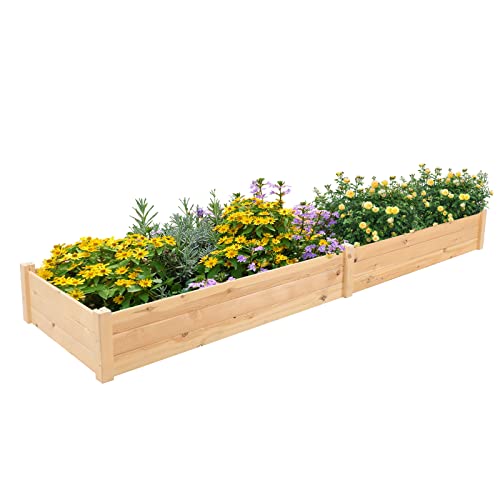
Best For: Gardeners seeking a tidy, spacious bed with a classic natural wood look for outdoor spaces.
Why It Was Selected: The 96″ x 24″ footprint creates a generous bed area, and solid fir wood supports longevity through seasons.
Caution: Solid wood needs maintenance over time to prevent weathering; consider sealing or staining for extended life in harsh climates.
AMERLIFE Raised Garden Bed With Fence

Best For: Gardeners dealing with deer or other wildlife in the area, or those needing a defined garden boundary.
Why It Was Selected: The built-in deer-resistant fence adds protection, while the bottomless design aids drainage and root growth. The secure door feature offers a private, accessible growing space.
Caution: The fence adds height and weight; ensure stable placement on soft ground or in windy locations.
Buying Guide
What size should I choose?
Choose based on available space and planned crops. Small patios benefit from 4×2 or 4×4 configurations, while larger backyards can accommodate 6×4, 8×4, or 8×8 layouts. Deep beds (around 12-15 inches) support root-heavy vegetables; shallower beds suit herbs and greens.
What material matters?
Natural wood like cedar and fir is durable and visually appealing. Cedar resists rot naturally and lasts longer in exposed areas. Fir is strong and affordable but may require sealing for longer outdoor life. Consider maintenance needs and whether you want a finished look or a naturally aging wood palette.
Is an open-base bed better than a closed base?
Open-base beds offer improved drainage and root development but require a well-drained planting site. Closed or liner-based designs help control soil contact with the wood and can better contain soil if you’re using heavier mixes.
Do I need a division or multiple sections?
Divisible or multi-section beds enable crop separation, rotation, and easier compartmentalization for different plant families. This helps with pest management and soil conditioning across zones.
What assembly considerations matter?
Look for a design that uses straightforward connections or pre-cut pieces. Tool-free or simple screw-fastened joints reduce setup time, especially for first-time gardeners. A level, stable base is essential for long-term performance.
How do I maintain wood beds long-term?
Regularly inspect for loose screws and consider sealing or staining cedar or fir to extend life. Ensure drainage is not blocked and replenish soil as crops are harvested to maintain healthy root zones.
Frequently Asked Questions
- Are wood raised bed kits suitable for vegetables?
- What’s the advantage of a divisible bed?
- Do cedar beds last longer than fir?
- Is assembly difficult?
- How should I position the bed for best drainage?
- Can I use a bottomless bed on any soil?
Yes, many kits provide ample depth and space for a wide range of vegetables, herbs, and flowers, with design options that support good drainage and crop separation.
Divisible beds allow you to grow different crops side by side, rotate plants, and tailor growing conditions in each section.
Typically yes; cedar has natural rot resistance and can last longer in outdoor conditions without chemical treatments.
Most kits are designed for straightforward assembly with readily available hardware; larger beds may take longer and require a level ground.
Place on a level, well-drained area with sufficient sun exposure. Avoid low spots where water can pool after rain.
Bottomless beds rely on good drainage; ensure base soil is well-draining and not prone to standing water.