Best Wooden Planters for Vegetables: Durable Raised Beds for Home Gardens
Answer: For growing vegetables at home, elevated wooden planters provide sturdy soil, better drainage, and easier access. The top picks below are best for gardeners seeking durable, multi-purpose beds for patios, backyards, or balconies. Ideal buyers include urban gardeners needing space efficiency, hobbyist growers wanting separate planting areas, and homeowners seeking a natural wood aesthetic. The selections emphasize structural strength, practical features, and easy assembly. A quick buying guide and FAQ follow to help you compare options at a glance.
| Product | Ideal For | Key Benefit |
|---|---|---|
| Yaheetech 8×2ft Divisible Raised Bed (Natural) | Two-root systems, flexible layout | Two growing areas with removable baffle |
| MIXC 48x24x31 Raised Bed | Heavy-duty, large spaces | Strong beam-and-column frame, 331 lb capacity |
| Yaheetech 8×2ft Divisible Raised Bed (Dark Brown) | Customizable garden layouts | Upgraded corner posts for flexible DIY |
| Yaheetech 34x18x30 Raised Bed (Legs & Shelf) | Compact, two-tier storage | Two-tier design with lower storage shelf |
| Best Choice 48x24x30 Raised Bed | Deeper planting, high yield | Deep 16″ soil depth for roots |
Yaheetech 8×2ft Divisible Raised Bed — Natural Wood

This two-panel planter offers separated growing areas for vegetables, herbs, or flowers with a removable baffle to form a larger bed. Best for gardeners who want to run mixed crops or trial different planting methods side by side. The design uses heavy-duty screws for quick assembly and stable performance. Limitation: assembly requires mechanical steps; ensure level ground for stability. Best for: small to medium patios, backyards with multiple crop zones.
MIXC 331 lb Capacity Wooden Raised Bed — 48x24x31

This large raised bed uses a beam-and-column structure for superior strength and supports up to 331 lbs of soil and produce. It includes drainage holes and a waterproof liner for moisture management. Best for: gardeners needing substantial soil depth and a robust frame for vegetable, flower, or herb beds. Caution: liner is provided for DIY use, and proper drainage requires correct hole adjustment after filling with soil. Choose this if you want maximum soil capacity and sturdy support.
Yaheetech 8x2ft Dark Brown Divisible Bed
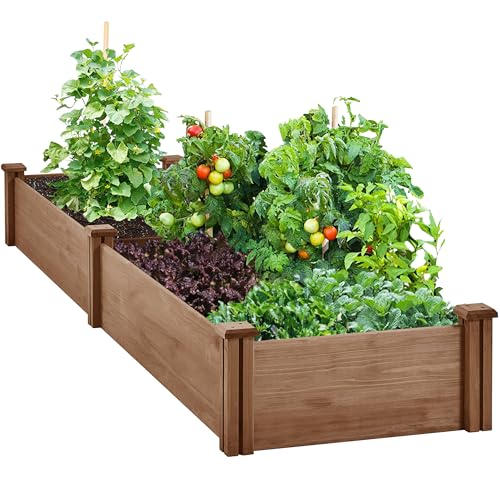
Features include a divided layout with a removable baffle and upgrades to corner post slotting for flexible, modular configurations. Best for: gardeners who plan to expand multiple beds into a larger garden design. Limitation: the enhanced DIY capability may require more planning and secure anchoring for stability when multiple beds are connected. Useful when creating a larger garden footprint with consistent wood aesthetics.
Yaheetech 34x18x30in Horticulture Bed With Legs

This 29.5″ tall bed reduces back strain and features a practical two-tier design. The top planting box is suited for vegetables, flowers, and herbs, while the lower shelf provides handy storage. Best for: gardeners who want easy access and additional tool storage in a compact footprint. Limitation: depth is shallower than some larger beds, so choose this if you need a lighter, easier-to-maneuver option.
Best Choice Products Raised Bed — 48x24x30

With deep soil capacity (16″ depth), this bed supports root vegetables and dense planting. It uses solid fir wood for strength and rot resistance, with reinforced corners for stable, long-term use. Best for: growers seeking maximum yield per bed and solid, low-maintenance materials. Caution: deeper beds require more soil and water management to maintain moisture balance.
Buying Guide
What planter size should I choose for my space?
Measure available space and consider walkways around the bed. Larger beds provide more growing area but require more soil and water. If space is tight, opt for modular or two-tier designs that can be expanded later.
Which wood and treatment matter for durability?
Common options include fir and pine. Look for untreated but naturally durable wood with smooth surfaces to reduce splinters. Treat or seal exterior surfaces if you expect exposure to rain or sun, but ensure finishes are safe for edible crops if contact with soil occurs.
How important is soil depth and drainage?
Deeper beds (around 12-16 inches) support a wider range of root vegetables. Drainage holes and liners help prevent waterlogging. Some models include a waterproof liner to simplify moisture control and soil longevity.
Is assembly straightforward, and can modules connect?
Modular beds with pin or slot connections offer flexible configurations. Ensure you have basic tools and follow manufacturer instructions. Consider beds with pre-drilled slots and clear labeling to speed assembly.
What features help with ongoing maintenance?
Upper planting boxes paired with lower shelves or tool storage reduce trips to the shed. Built-in drainage and liners help manage soil moisture, while raised heights reduce bending, benefiting long sessions of gardening.
FAQ
- Are wooden planters weather-resistant? Wood varieties like fir and pine can resist elements when properly finished or designed with protective features. Look for solid construction and raised legs to minimize ground moisture exposure.
- What soil depth is best for vegetables? Root vegetables typically benefit from at least 12 inches of soil depth; deeper beds support a wider range of crops and larger yields.
- Do these beds require liners? Liners help protect wood from rot and reduce soil contact with the wood. They also help retain moisture and simplify cleanup.
- Can I combine multiple beds? Some models use upgraded corner posts or modular slots to connect several beds, enabling larger garden layouts or varied plantings.
- Which bed is best for beginners? Medium-sized beds with straightforward assembly, built-in drainage, and simple maintenance are ideal for beginners and provide a stable learning curve.
- Is assembly hard? Most wooden planters come with labeled parts and hardware. A standard toolkit and a clear guide typically suffice for quick assembly.