Best Yellow Black-Eyed Susan Vine Seeds and Plants for Garden Color
The best yellow black-eyed Susan vine depends on whether you want seeds to grow, a faster start with live plants, or maintenance-free artificial greenery. Seed Needs is suited to gardeners seeking a vigorous annual for screening, Park Seed to gardeners wanting a classic yellow-to-orange flowering vine, and Sow Right Seeds to buyers who value detailed sowing information. Sunny Susy offers two established plants with distinctive yellow-edged blooms. The artificial ivy is a decorative alternative, not a living Thunbergia vine.
| Product | Best For | Type |
|---|---|---|
| Seed Needs Black-Eyed Susan Vine Seeds | Covering a fence or trellis | Seeds |
| Park Seed Black-Eyed Susan Vine | Containers and climbing structures | Seeds |
| Sow Right Seeds Black-Eyed Susan Vine | Buyers comparing sowing details | Seeds |
| Sunny Susy Black-Eyed Susan Vine | Starting with live plants | Two plants |
| RECUTMS Artificial Ivy Vines | Maintenance-free seasonal decor | Artificial garland |
Seed Needs Black-Eyed Susan Vine Seeds

These two packs of Thunbergia alata seeds are best for gardeners who want to grow a flowering vine from seed and use its foliage for seasonal coverage. The listed features describe 1.5-inch yellow and orange blooms and growth reaching up to 20 feet in length. That long growth habit can suit a fence or other supported garden structure.
Seed Needs is a useful choice when a taller, leafy screen is a priority alongside summer color. The vine is described as an annual that grows quickly, blooms through summer, and wilts with the first frost. Seeds may be collected from spent blooms, according to the product description. Choose this if you have room and support for a long vine; avoid it if you want a perennial that remains through winter.
Park Seed Black-Eyed Susan Vine

Park Seed is best for gardeners who want a classic flowering vine suited to both vertical supports and containers. The listed description says its 1–2-inch flowers range from mid-yellow to deep orange, often with a dark center. It can climb fences, trellises, mailbox posts, and arbors, or spill from hanging baskets and large patio pots.
The product is described as an annual with blooms from early summer until frost once established. Its bushy growth and flexible placement make it a better fit than a fence-only choice for gardeners deciding between a climbing display and a container planting. The listing does not specify germination timing or planting depth, so buyers seeking detailed seed-starting directions may prefer an option that provides those figures.
Sow Right Seeds Black-Eyed Susan Vine
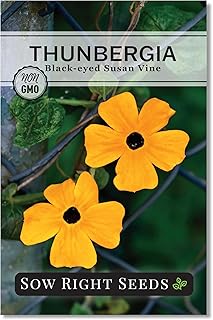
This seed packet is best for gardeners who want specific guidance for planting Thunbergia alata. The listed minimum is 2.75 grams, described as about 100 seeds. The product information recommends sowing ½ inch deep, spacing plants 14–16 inches apart, and using full sun or partial shade. It gives a germination range of 10–21 days when soil is 60–70°F.
The stated mature size is 3–8 feet tall with an 18–24-inch spread, and flowers are listed as maturing in 60–90 days. The description specifies USDA zones 9–12 and notes that bees and butterflies visit the flowers. These details make it a strong comparison choice for planning a bed or support. Check the zone information against your growing conditions before choosing it.
Sunny Susy Black-Eyed Susan Vine Plants

Sunny Susy is best for buyers who prefer a two-plant set rather than starting with seeds. The described flowers are scarlet and amber-orange with yellow edges and dark centers, offering a more specific color pattern than the general yellow and orange blooms listed for the seed products. The fast-growing, twining vine is described as suitable for trellises, fences, and hanging baskets.
Choose this set if you want a head start with plants and prefer its distinctive flower colors. The listing does not provide mature dimensions, growing-zone guidance, or detailed care instructions, so it offers less planning information than the Sow Right Seeds packet. It is also not a solid-yellow option: its flowers include scarlet and amber-orange.
RECUTMS Artificial Ivy Vines

This is best for shoppers who want decorative greenery without growing or caring for a plant. The package contains two artificial black-and-white ivy garlands, each listed as 6 feet long, plus four hooks. The product description says the plastic vines are bendable, UV resistant, washable, and intended for indoor or outdoor decor, including Halloween and autumn displays.
This is not a yellow black-eyed Susan vine and will not produce flowers or grow. It is included only as a maintenance-free decorative alternative for buyers whose main goal is dressing a space. The listing notes that the artificial plants may have an odor when unpacked and suggests airing them out for one to two days.
Buying Guide: How To Choose A Yellow Black-Eyed Susan Vine
Should you buy seeds or live plants?
Seeds suit gardeners who want to grow from the beginning and can wait for germination and flowering. Sow Right provides specific planting and germination figures, while Seed Needs highlights long growth and privacy potential. Sunny Susy is the live-plant option in this selection, so it may suit buyers who prefer not to start from seed. The listing does not provide a flowering schedule or mature size for those plants.
How much space and support will the vine need?
Plan for a trellis, fence, arbor, or another structure if you want the vine to climb. Listed growth estimates differ: Seed Needs describes growth up to 20 feet in length, while Sow Right gives a height of 3–8 feet and a spread of 18–24 inches. These figures come from different product descriptions, so check the individual listing and allow room for the plant’s growth.
Which flower color should you expect?
Black-eyed Susan vine seed descriptions commonly list yellow and orange flowers with a dark center. Sunny Susy is specifically described as scarlet and amber-orange with yellow edges, so choose it for that mixed color pattern rather than for purely yellow flowers. Flower appearance can vary by product and variety.
What should you check before planting?
Compare the packet’s planting depth, spacing, light guidance, and climate information. Sow Right lists full sun or partial shade, ½-inch sowing depth, and USDA zones 9–12. The other listings provide fewer specific growing details. These vines are described as annuals that may be damaged by frost, so account for your local growing season.
Frequently Asked Questions
Is black-eyed Susan vine an annual or a perennial?
The seed listings describe Thunbergia alata as an annual. Seed Needs says the vine wilts with the first frost, so it should not be assumed to survive winter outdoors.
Does black-eyed Susan vine need a trellis?
A trellis is useful for guiding the twining vine upward, but product descriptions also list fences, arbors, mailbox posts, and hanging baskets as options. Choose support based on the space and growth habit you want.
How long does black-eyed Susan vine take to germinate?
Sow Right Seeds lists germination in 10–21 days when soil temperatures are 60–70°F. The other seed listings do not provide a germination timeframe.
Can black-eyed Susan vine grow in a hanging basket?
Yes. The Park Seed and Sunny Susy descriptions identify hanging baskets as suitable placements. A basket can display trailing growth, while a trellis or fence supports upward climbing.
Are all black-eyed Susan vine flowers yellow?
No. The listed products describe flowers in yellow, orange, scarlet, and amber-orange combinations. Sunny Susy specifically has scarlet and amber-orange blooms edged in yellow.