Best Automatic Chlorine Feeders for Above Ground Pools: Easy, Clog-Free Sanitation
Answering the main buyer intent: find reliable automatic chlorine feeders that work well with above ground pools. These feeders simplify sanitization, reduce manual dosing, and help keep water safe with minimal intervention. This guide highlights five top options, explains who benefits most from each, and explains why they stand out for above ground setups. The selections emphasize durability, ease of installation, adjustable output, and compatibility with standard 3-inch chlorine tablets. A quick comparison table is included to help you choose at a glance.
| Product | Best For | Key Benefit |
|---|---|---|
| Hayward CL200EF In-Line Feeder | Medium to large above-ground systems | High capacity up to 9 lb tablets for longer intervals |
| SWIMLINE HydroTools 87501 | Budget-minded setups | Universal compatibility with simple, reliable operation |
| XtremepowerUS Automatic Chlorinator | Offline installations with space constraints | 9 lb capacity, adjustable flow through a dial |
| Hayward CL220EF Off-Line Feeder | Close-to-ground or tucked-away installs | Enclosed design with easy access for tablets |
| Poolzilla Automatic Chlorinator | Long-term, corrosion-resistant setups | Corrosion-proof design with up to 9 lb capacity |
Hayward CL200EF In-Line Automatic Chlorine Feeder

The Hayward CL200EF provides automatic, offline pool chlorination with a high-capacity design that holds up to 9 pounds of chlorine tablets. It is best for in-ground pools but can be appropriate for above-ground systems with compatible plumbing. It delivers consistent chlorine distribution with minimal manual adjustments, helping to maintain balanced water chemistry. Best for households seeking fewer refill cycles and reliable performance from a trusted brand.
Who this is for: homeowners with larger above-ground systems or those upgrading to a more robust feeder. Why selected: high capacity reduces refills, durable housing resists chemical exposure, and it integrates cleanly with standard lines. Caution: designed for in-line use; ensure your above-ground plumbing can accommodate inline installation without reducing flow or creating leaks.
SWIMLINE HydroTools 87501 Economy In-Line Feeder
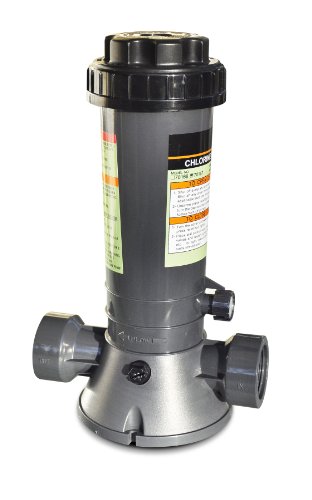
The Hydrotools 87501 is an economy in-line chlorine feeder designed for universal compatibility with above-ground and in-ground pools. It continuously dissolves chlorine or bromine to maintain crystal-clear water. Its simple operation, reinforced lid, and 360° adjustment dial support easy customization of output to pool size and usage. Best for budget-conscious buyers who still want reliable, automated sanitation.
Who this is for: smaller to mid-size above-ground pools needing straightforward, automatic dosing. Why selected: affordable, easy to install, and designed to work with existing equipment. Caution: as an economy model, long-term wear should be monitored; periodic seal checks help prevent leaks.
XtremepowerUS Automatic Chlorinator Feeder

The XtremepowerUS model is an offline chlorinator designed for spaces where inline installation isn’t feasible. It holds up to 9 pounds of tablets and uses a dial-controlled valve to adjust feed rate, ensuring a practical balance for medium-sized pools. Best for customers with limited under-pool space or those who want offline installation flexibility.
Who this is for: above-ground pools without room for inline plumbing. Why selected: 9 lb capacity plus a simple dial control makes ongoing maintenance predictable. Caution: as an offline unit, ensure it is positioned to minimize flow restrictions and that the valve is accessible for adjustments.
Hayward CL220EF Off-Line Chlorinator

The CL220EF is an off-line chemical feeder with a fully enclosed design, reducing the chance of fumes escaping and offering safe, simple access to add tablets or sticks. It is suitable for above-ground installations where compact, sealed units are preferred. Best for users prioritizing a cleaner install and easier maintenance access.
Who this is for: buyers needing a discreet, enclosed feeder that minimizes chemical exposure. Why selected: no special venting required; easy access for tablet addition. Caution: ensure enough clearance around the unit for lid removal and tablet refills in limited spaces.
Poolzilla Automatic Chlorinator

The Poolzilla chlorinator is designed for long-term use with above-ground and in-ground pools, supporting up to 9 pounds of tablets. Its dial-controlled valve helps you adjust the feed rate precisely, and the unit is noted for corrosion resistance. Best for buyers who want a durable feeder capable of handling larger tablet loads.
Who this is for: homeowners seeking corrosion resistance and straightforward dial adjustments. Why selected: robust design and wide compatibility with common tablet sizes. Caution: verify compatibility with your pool’s plumbing layout to ensure a smooth inline connection or appropriate offline setup.
Buying Guide
What size feeder do I need for my pool?
Consider the pool’s surface area, water volume, and typical chlorine usage. Larger above-ground pools or heavy usage may benefit from feeders that hold 6–9 pounds of tablets to reduce refills. Smaller setups can manage well with 3–6 pound units.
Inline vs offline: which is right for you?
Inline feeders connect directly in the return line and are ideal when there is available plumbing. Offline feeders sit outside the flow path and are easier to install where space is tight or plumbing changes are impractical. Inline units may slightly affect water flow; offline units minimize flow disruption but require a separate mounting location.
Capacity and tablet compatibility
Most popular feeders use 3-inch chlorine tablets. Check whether the unit supports standard 3-inch tablets only or also accommodates 1-inch variants. A higher capacity reduces refill frequency but may require more space and a larger mounting footprint.
Ease of use and maintenance
Look for features such as a clear dial that shows feed rate, an easy-access lid or cover for tablet loading, and seals designed to resist chemical wear. Enclosed designs reduce fumes exposure and keep the installation neat.
Durability and warranty considerations
Corrosion-resistant housings and manufacturer-reinforced seals improve long-term reliability in wet pool environments. While warranties vary, products from established brands tend to offer better service support and replacement parts over time.
Installation flexibility and compatibility
Confirm that the feeder fits your pool’s piping size and that mounting options align with your equipment rack or deck space. Some units are universal and work with most standard systems; others may require adapters or additional fittings.
Safety and best practices
Always follow the manufacturer’s instructions for loading tablets and adjusting flow. Store chlorine tablets away from sunlight and heat, and ensure that the feeder is installed in a location accessible for routine maintenance but out of reach of children.
Frequently asked questions
- Do above-ground pools use the same chlorine feeders as in-ground pools?
Yes, many feeders are universal and compatible with both, but always verify inline vs offline design and plumbing requirements for your setup. - How often should I refill a 9-lb feeder?
Refill frequency depends on pool size, usage, and sanitizer demand. Larger capacities mean fewer refills, but plan for routine checks every few weeks during peak season. - Can I convert an inline feeder to offline?
Converting typically requires different plumbing or mounting adaptations. Check the manufacturer’s guidance or consult a professional. - What happens if the feeder is not calibrated correctly?
Improper calibration can lead to too much or too little sanitizer, causing water imbalance and potential skin or eye irritation. Adjust gradually and test water chemistry often. - Are these feeders compatible with bromine tablets?
Some models support bromine, but confirm tablet compatibility in the product specs before purchasing. - Is a sealed, enclosed feeder safer for beginners?
Enclosed designs reduce exposure to fumes and simplify maintenance, making them favorable for new pool owners.