Best Vegetable Planter Boxes for Easy Elevated Gardening
Answering the common search for efficient vegetable planter boxes, this guide highlights five durable options that maximize space, reduce bending, and support healthy growth. Each pick suits different buyers: balcony gardeners who want height, urban dwellers needing self-watering features, and those seeking sturdy, wood or plastic options for year‑round use. Below is a quick buyer’s table and detailed product analysis to help you choose with confidence.
| Product | Best For | Key Benefit |
|---|---|---|
| OYEAL Raised Garden Bed | Balcony and patio gardeners | Includes trellis and elevated height |
| Monirsen 57″ Planter | Vertical gardeners | Self-watering with vertical trellis |
| Growia 56″ Planter | Climbing vegetables | Self-watering, sturdy metal frame |
| CAKKVDE 7 Pack Window Boxes | Windowsills and small spaces | Compact, durable plastic with trays |
| Best Choice 48 x 24 x 30 | Larger allotments | Long bed space with solid construction |
OYEAL Raised Garden Bed 32″ Tall Elevated Planter

The OYEAL raised bed is designed for ease of access and vertical planting. It includes four separate boxes plus an 11-inch trellis to support climbing crops. This product is best for balcony or deck gardeners who want a multi‑bed layout without stooping. The 32‑inch height reduces bending during planting and harvesting, promoting ergonomics for extended sessions. A drainage hole and removable tray help maintain soil health and keep surrounding areas clean. Consider this option if you want a complete elevated solution with a built‑in trellis.
Best for: Users who want a vertical, multi‑zone planter on a balcony or patio and appreciate an integrated trellis for tomatoes or strawberries. Caution: Ensure the height fits your space and that the trellis supports the expected crop weight.
Monirsen 2 Pack Raised Garden Bed With Trellis, 57”
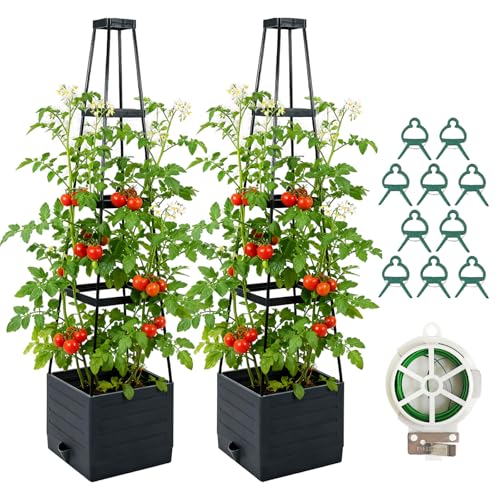
This model emphasizes a tall, vertical footprint with a movable trellis and a self‑watering concept. The siphon-based reservoir maintains consistent moisture, reducing daily watering needs. The 57‑inch tower design helps climb crops stay neat while freeing ground space. Made from durable PP plastic, it withstands sun, rain, and wind. This option is ideal for gardeners who want low maintenance water management and a strong vertical feature in patios or backyards.
Best for: Those who need a tall, self‑watering system with an adaptable trellis for tomatoes and vines. Caution: PP plastic can heat up under strong sun, so monitor root exposure on hot days.
Growia 2 Pack Tomato Planter With Trellis, 56 Inch

The Growia set emphasizes space efficiency with a 56‑inch vertical planter that supports climbing crops. Its self‑watering feature provides steady moisture, helping reduce irrigation frequency. The metal frame offers durability and stability for outdoor use, particularly on decks or patios. Choose this if you want a robust vertical option that keeps vines upright and organized while saving ground area.
Best for: Gardeners growing tomatoes, cucumbers, or beans who need vertical growth and reliable moisture. Caution: Metal frames can become hot in direct sun; place away from direct midday heat if possible.
CAKKVDE 7 Pack Window Box Planters, 17 Inch

CAKKVDE offers compact window boxes ideal for windowsills, balconies, and small patios. Each planter measures about 16.5 by 6.9 by 5.7 inches, providing adequate depth for herbs and compact vegetables. The set includes removable trays for drainage management. The lightweight plastic construction is weather‑resistant, making it suitable for year‑round use in diverse climates. This choice is best for urban gardeners who want a large quantity of planters in a tight space.
Best for: Window sills and small balconies needing multiple, uniform planters. Caution: The 5.7″ height may limit root depth for larger vegetables.
Best Choice Products Raised Garden Bed, 48 x 24 x 30
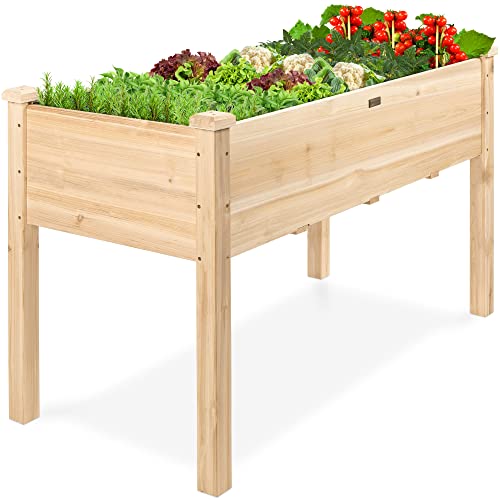
This large raised bed uses all‑wood construction for a natural look and solid durability. The long bed space of about 5 cubic feet provides ample room for vegetables, herbs, and companion plants. Proper drainage helps prevent waterlogging and mineral buildup, supporting healthy root systems. The wood is naturally strong and weather‑resistant, suitable for patios, balconies, and yards. It’s a practical choice for gardeners who want a substantial, easy‑to‑assemble raised bed.
Best for: Homeowners who need a roomy, all‑wood planter with reliable drainage for a variety of vegetables. Caution: Wood requires periodic maintenance to extend lifespan in harsh climates.
Buying Guide: Key Considerations
- Space and orientation: Measure your area and decide between vertical, elevated, or ground-level beds. Height reduces bending, while width affects how many crops you can grow.
- Water management: Self‑watering designs reduce irrigation effort. Look for reservoirs, drainage trays, and moisture control features.
- Material durability: Plastic planters resist weathering and are lightweight. Wood planters offer a natural look but require maintenance; metal frames provide strength but may heat up.
- Drainage and root health: Ensure planters have drainage holes and trays to prevent root rot and soil saturation.
- Assembly and maintenance: Consider the level of assembly required and whether the product includes accessories like trellises, plant labels, or gloves.
- Plant compatibility: Confirm the planter’s depth and capacity suit your chosen crops, from herbs to tomatoes and peppers.
Frequently Asked Questions
- What is the best planter for small balconies?
– A compact 17–18 inch width planter with vertical or elevated height. Look for integrated trellises or multiple box sections to maximize space. - Are self-watering planters worth it?
– They help maintain consistent moisture and reduce daily irrigation, especially in hot climates or busy households. - Which material lasts longest outdoors?
– Durable plastics with UV resistance and weatherproof wood show strong long‑term performance; metal frames are robust but may heat up in sun. - How deep should a veggie planter be?
– Leafy greens can thrive in shallower pots, while root crops and tomatoes benefit from deeper beds (6–12 inches or more). - Do these planters support climbers?
– Models with trellises or tower designs are best for tomatoes, cucumbers, beans, and similar climbers. - Can I use these indoors?
– Yes, many are suitable for bright indoor spaces, provided there is adequate light and drainage management.