Best Chlorine Testing Kits for Swimming Pools
If you want clear, quick results to keep pool water safe, balanced, and ready to swim in, choose a chlorine testing kit that fits your pool size and maintenance routine. These kits help you monitor chlorine levels, pH, and related parameters so you can act fast if readings drift. This guide highlights five reliable options for American homeowners, ranging from all-in-one test kits to versatile strips. Whether you’re a weekend pool owner or maintaining a spa, pick a kit that matches your testing frequency and accuracy needs.
| Product | Best For | Key Parameters Tested |
|---|---|---|
| Lupo 3-in-1 Pool Test Kit | Residential pools and spas needing quick results | Total Chlorine, Total Bromine, pH |
| LUPO 2-In-1 Pool Test Kit | Streamlined testing for chlorine and pH | Free Chlorine, pH |
| Poolmaster 5-Way Test Kit | Comprehensive chemistry checks with a color-match system | Chlorine, Bromine, pH, Acid Demand, Total Alkalinity |
| XtremepowerUS 5-Way Test Kit | DIY maintenance with a durable case | Chlorine, Bromine, pH, Acid Demand, Total Alkalinity |
| JNW 7-in-1 Pool Test Strips | Low-cost, quick checks with multiple parameters | Free Chlorine, Alkalinity, pH, and more |
Lupo 3-in-1 Pool Test Kit
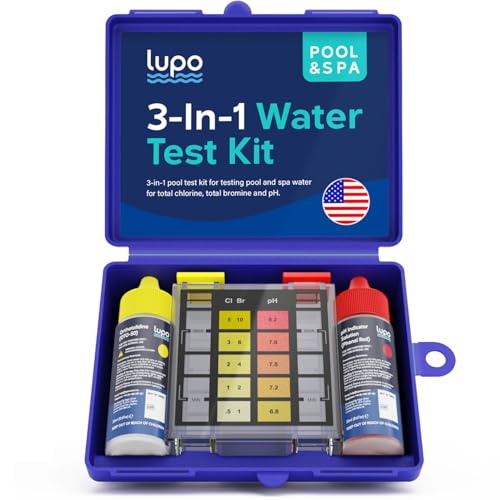
The Lupo 3-in-1 kit tests Total Chlorine, Total Bromine, and pH, delivering results in seconds. It includes reagents sufficient for 100 tests and uses a USA Swimming-approved testing system for high accuracy. This option is best for residential pools and spas that want quick, reliable results without professional testing.
Who this is for: homeowners who test multiple times per week and want a compact, easy-to-use kit with a proven accuracy standard. Limitation: fewer tested parameters than 5- or 6-way kits, which may require additional tools for full chemistry checks.
LUPO 2-In-1 Pool Test Kit
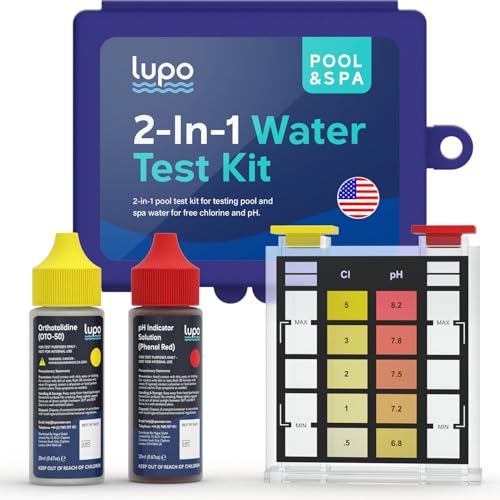
This 2-in-1 kit measures Free Chlorine and pH, with reagents for 100 tests. It leverages the same trusted water testing system as other Lupo products, providing fast, actionable results. It’s ideal for pool owners who want a simple, dependable setup focused on the essentials.
Best for: small to medium pools where quick checks of chlorine and pH suffice. Caution: does not test total bromine or total alkalinity, so you may need additional tests for full chemistry oversight.
Poolmaster 22260 5-Way Test Kit
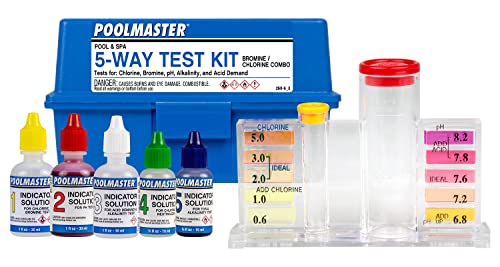
Poolmaster’s 5-Way kit covers Chlorine, Bromine, pH, Acid Demand, and Total Alkalinity, with a clear-view block and integrated color chips for accurate color matching. It comes with multiple test solutions and is organized in a compact case for easy storage and portability.
Best for: pool or spa owners needing a broad chemistry snapshot with reliable color-reference testing. Limitation: some users may require separate tests for specific ions or trace elements beyond the five parameters.
XtremepowerUS 5-Way Test Kit

XtremepowerUS offers a five-parameter kit including Chlorine, Bromine, pH, Acid Demand, and Total Alkalinity, all housed in a durable blue case. It provides step-by-step instructions and a quick-reference guide, making it accessible for DIY water testing over the swimming season.
Best for: DIY pool owners who want a full chem check without frequent kit changes. Caution: may require careful interpretation of color results if lighting is suboptimal or you’re new to color matching.
JNW 7-in-1 Pool Test Strips

JNW Direct’s 7-in-1 strips provide a broad panel, including Free Chlorine, pH, Alkalinity, and more, with a simple dip-and-read method. These strips are cost-effective for regular checks and are suitable for quick daily or weekly monitoring.
Best for: budget-minded pool owners or renters seeking fast, broad-spectrum results. Limitation: strips can be less precise than liquid tests, especially when color matching under bright or inconsistent lighting.
Buying Guide: Key Considerations For Chlorine Testing Kits
- What parameters do you need? Decide if you only need chlorine and pH, or a broader panel (bromine, alkalinity, acid demand, etc.).
- How often will you test? Frequent testing benefits from simple, quick kits, while deeper checks may justify a multi-parameter kit.
- What pool type and size? Larger or spa pools may require higher test volume or more robust reagents.
- What’s your preferred testing method? Liquid reagents offer precise results; test strips provide speed and convenience but may be less precise.
- Storage and durability matters. Choose a kit with a sturdy case and well-labeled reagents to prevent mix-ups and spills.
- Accuracy versus practicality. USA Swimming-approved systems suggest reliability, but always follow kit instructions carefully for best results.
FAQ
- Why should I test chlorine and pH separately? Separate tests reduce cross-interference and improve accuracy of each parameter, helping you maintain balanced water chemistry.
- How often should I test my pool water? For residential pools, testing at least weekly is common; test more often during heat waves or heavy use.
- Can test strips replace liquid tests? Strips are convenient for quick checks but may be less precise; consider a mixed approach if precision matters to you.
- What indicates I need to adjust chlorine levels? If readings fall outside recommended ranges, adjust chlorine or seek professional guidance to prevent irritation or algae growth.
- Are USA Swimming-approved kits more reliable? They indicate a standard of accuracy, but proper use and storage are essential for consistent results.
- Should I test for total alkalinity as well? Yes, total alkalinity helps stabilize pH and reduces fluctuations that can irritate eyes and skin.