Best Columnar Blue Spruce Dwarf Trees for Narrow Spaces
Direct answer: For small, upright, columnar evergreens that stay compact, choose dwarf conifers that maintain a tall, narrow profile with minimal pruning. The top options include dwarf Alberta spruces, a blue-green conifer with slow growth, a compact blue-tinged juniper, and slender Italian cypress varieties that deliver vertical screening. This guide compares five suitable choices, noting ideal climates, mature sizes, and best uses for homeowners, urban gardeners, and landscape designers seeking year-round structure without taking up too much space.
Buyer types: homeowners decorating small yards or front foundations; landscapers needing narrow privacy screens; city dwellers with limited plantable area; individuals seeking year-round evergreen color with low maintenance.
Summary table of selected products
| Product | Best For | Approx. Mature Size | Notes |
|---|---|---|---|
| Dwarf Alberta Spruce 1 Gallon | Small spaces, container planting | Unspecified; typical dwarf form | California shipping restrictions noted |
| Picea glauca Conica (Dwarf Alberta Spruce) #2 | Cold climates, low-maintenance yards | 6-8 ft tall; 3-4 ft wide | Fully rooted; ready to plant |
| ‘Blue Star’ Juniper | Low maintenance, colorful foliage | 2-3 ft tall and 3-4 ft wide at maturity | 3-gallon pot; shipping via UPS |
| 2 Blue Italian Cypress Trees | Privacy screens, tall vertical structure | 40–60 ft tall; 3–10 ft wide | 2 starter saplings in cubes |
| Picea glauca Conica #3 (Dwarf Alberta Spruce) | Year-round green accent | Similar to #2; compact | Ready to plant; multiple green shades |
Dwarf Alberta Spruce 1 Gallon

Brand: Generic
Features: CANNOT SHIP TO CALIFORNIA Only ships in the CONTINENTAL US
Best for: gardeners needing a tiny, evergreen accent plant for containers or small beds. This option is straightforward for limited spaces and is commonly chosen for foundation plantings or entryways where a vertical, neat form is desired.
Why selected: It offers a compact form and a recognizable evergreen texture suitable for tight plots where scale matters. The limitation to continental US shipping should be considered when planning purchases.
Picea glauca Conica (Dwarf Alberta Spruce) Evergreen, #2

Brand: Green Promise Farms
Features: It is fully rooted in the soil and can be planted immediately upon arrival, weather permitting. Planting and how-to-care instructions will arrive with shipment., For Best results, plant in used zones 3-8. Mature Height is 6-8ft, mature spread is 3-4ft., Widely used in the landscape because of its low maintenance, slow growth habit and rugged dependability.
Best for: homes or small yards in cooler regions looking for a classic miniature evergreen with a predictable, slow-growing shape.
Why selected: Ready-to-plant, with a proven form and adaptability to cold zones, and a compact footprint that remains manageable in many landscapes. A potential drawback is the longer-term height in restricted spaces; plan for eventual pruning or spacing.
‘Blue Star’ Juniper – Dwarf Blue Evergreen

Brand: Rogers’ Nursery
Features: Dwarf blue evergreen that is easy to grow – slow-growing and needs little maintenance or pruning, SHIPPING: We will ship plants via UPS, fully rooted in 3 gallon pots, SIZE: Plants are 8″+ tall and 12+” wide now, growing to about 2-3′ tall and 3-4′ wide at maturity
Best for: small or medium landscapes needing a blue-trosted accent with minimal pruning. Ideal for rock gardens, borders, or as a color anchor in mixed evergreen beds.
Why selected: The plant’s blue-green hue remains vibrant with low upkeep. Limitation: mature size is still relatively modest, but the plant may spread more than expected if not managed.
2 Blue Italian Cypress Tree – Fast-Growing Privacy Tree
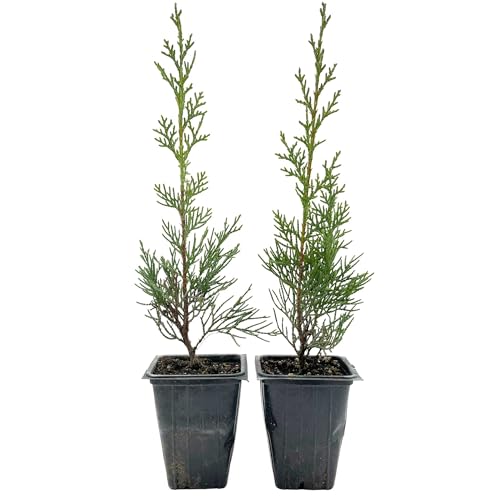
Brand: CitronellaKing
Features: READY TO PLANT: Includes 2 Blue Italian Cypress starter saplings in 3.5″ cubes. Each plant is well-rooted and ready to thrive. Natural variations in size, color, or seasonal appearance may occur., ABOUT THIS TREE: A fast-growing, evergreen conifer tree reaching 40–60 ft tall × 3–10 ft wide. Dense silvery-blue foliage forms a naturally symmetrical, upright silhouette, and thrives in USDA Zones 7–10. Also known as Italian Pencil Pine., PERFECT FOR LANDSCAPING: Ideal for tall privacy screens, columnar hedges, ornamental borders, and mass planting for dramatic height in compact spaces. Its narrow, upright form delivers vertical structure in any landscape.
Best for: homeowners seeking a strong vertical privacy element in warmer climates (zones 7–10) where height and columnar shape are priorities.
Why selected: Provides dramatic screening and blue-silver color in a narrow footprint. Caution: very tall at maturity; ensure adequate space for eventual height and consider zone suitability before ordering.
Picea glauca Conica (Dwarf Alberta Spruce) Evergreen, #3
Brand: Green Promise Farms
Features: LIVE PLANT: Enjoy this outdoor mini Christmas tree all year around. A slow-growing pyramidal spruce evergreen plants and shrubs with rich emerald green foliage., READY TO PLANT: These Potted Dwarf Alberta Spruce evergreen trees with foliage colors of various green shades arrive fully rooted in the soil and can be planted immediately upon arrival, weather permitting., POPULAR USES: ‘Conica’ Dwarf Alberta Spruce evergreen trees are popular in landscape due to low maintenance, slower growth and rugged dependability. They also thrive extremely well in both partial shade and full sunlight.
Best for: those who want a truly small, ornamental evergreen with a classic conical shape in partially shaded areas.
Why selected: This option emphasizes year-round foliage and a compact, pyramidal form. Limitation: growth is slow, so the transformation into a larger screen may take time.
Buying Guide
What should I consider before choosing a columnar blue spruce dwarf?
Climate compatibility is key. Choose varieties rated for your USDA zone to minimize winter damage and maximize evergreen color. Consider mature height and width to ensure the plant fits your space and any planned screening needs.
How important is color and texture?
Blue-tinted evergreens provide distinct color contrast and year-round interest. If color stability is important, prioritize cultivars known for blue or silvery foliage, and avoid those with variable green hues in harsh sun.
What about maintenance and pruning?
Most columnar dwarfs require minimal pruning. If a plant naturally grows wider than desired, selective trimming can maintain the intended silhouette. Avoid heavy pruning that can stress or shock the plant during extreme weather.
What about planting site and soil?
Most dwarf evergreens prefer well-drained soil. Partial shade is acceptable for many varieties, but full sun generally supports robust color. Ensure adequate spacing to accommodate eventual growth and air circulation to prevent disease.
Watering and care essentials
Water consistently after planting to establish roots, then reduce frequency if rainfall is adequate. Mulching helps retain moisture and regulate soil temperature. Avoid overwatering, especially in poorly drained soils.
Choosing the right product for your goals
Pick the dwarf Alberta spruce options for classic conical form and cold tolerance. Choose the blue-toned juniper or Italian cypress for higher color intensity or taller vertical accents. If you need rapid privacy, lean toward the Italian cypress varieties, while smaller containers suit dwarf Alberta spruces for patios and entryways.
FAQ
- Are columnar blue spruce dwarfs suitable for pots? Yes, many dwarf forms are suitable for containers, but ensure proper root space and irrigation.
- What is the typical mature size? Sizes vary; most stay under 10 feet tall, with widths of 3–6 feet depending on cultivar and environment.
- Which soil type works best? Well-drained soil is ideal; amend heavy clay or soggy soils to improve drainage.
- Do these need pruning? Most require minimal pruning; prune lightly to maintain the desired shape and remove any dead wood.
- Are blue-tinted varieties more maintenance-heavy? Generally no; color is cosmetic, and maintenance is mainly about watering and spacing.
- Can these be planted in zones outside their comfort range? Planting outside recommended zones increases risk of winter damage; consult local extension services for guidance.