Best Zero Turn Mower for Home Yards: Top Residential Picks in 2026
Searching for a zero-turn mower that handles a residential yard with ease? This guide highlights five top options, explaining who each is best for and why it’s a solid choice for home use. Whether you need agility on tight corners, powerful cutting for large lawns, or a battery-powered option to reduce emissions, there’s a fit here. The following selections are aimed at homeowners seeking durable performance, straightforward maintenance, and value in a home setting.
| Product | Deck Size | Engine/Power | Best For | Why Pick It |
|---|---|---|---|---|
| Husqvarna Z254F | 54 in. | 23 HP Kawasaki | Medium-Large Yards | Powerful Kawasaki engine with a wide deck for fast, even cuts |
| EGO POWER+ Z6 | 42 in. | Peak power from six 56V batteries | Low-noise, maintenance-free | Battery-powered with long run time and stable balance on slopes |
| Ariens IKON Onyx | 52 in. | 23 HP Kawasaki | Professional-like performance at home | Reliable propulsion and a capable cut for varied lawns |
| Husqvarna Z246 | 46 in. | 22 HP Briggs | Smaller to mid-sized lawns | Compact and maneuverable with a solid EzT transmission |
| Craftsman 46″ Gas Zero-Turn | 46 in. | 22 HP Kohler 7000 | Value-conscious homes | Strong engine with durable deck and dual hydrostatic transmission |
Husqvarna Z254F 54 in. 23 HP Kawasaki Zero Hydrostatic Turn Riding Mower
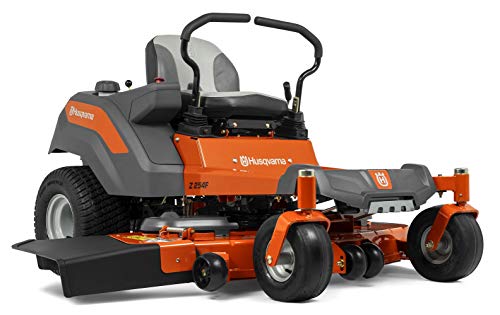
Best for: Homeowners with medium to large lawns seeking fast, powerful mowing with a wide cutting deck. This model uses a 23 HP Kawasaki engine for reliable starts and a top speed of 6.5 MPH, enabling efficient mowing in fewer passes. The hydrostatic transmission offers smooth operation with little maintenance, making it ideal for busy households.
What to know: The ClearCut 54 in. deck is designed for deep airflow and efficient bagging, delivering a clean cut and effective collection. Consider this pick if you want professional-like performance with straightforward upkeep. Caution: Larger decks require more storage space and skill to maneuver in tight areas.
EGO POWER+ Z6 Zero Turn Riding Lawn Mower, 42″ Deck

Best for: Homeowners seeking a quieter, maintenance-free option with strong run-time on larger, flat to moderately sloped lawns. The Z6 uses peak power from six 56V ARC Lithium batteries, delivering power comparable to a gas mower without the engine noise or fuel needs.
Why it’s selected: It can mow up to about 1.5 acres per charge with six batteries and includes a deck suspension system for a quieter cut and improved balance on slopes. Limitation: Battery packs require replacement over time, and the mower is heavier when fully charged, potentially affecting edge handling on tight spaces.
Ariens IKON Onyx (52″) 23HP Kawasaki Zero Turn Mower

Best for: Homeowners wanting a dependable, professional-grade mowing experience on larger residential lots. The IKON Onyx pairs a 23 HP Kawasaki engine with a 52″ deck for efficient coverage and consistent cut quality.
Why it’s selected: A robust powertrain and proven Ariens build deliver good performance in varied grass conditions. Caution: Higher upfront cost and more maintenance than entry-level models.
Husqvarna Z246 (46″) 22HP Briggs Zero Turn Lawn Mower

Best for: Budget-minded homeowners with mid-sized yards who still want a true zero-turn experience. The Z246 offers a 46″ stamped deck and a 22 HP Briggs engine for reliable cuts at a lower price point.
Why it’s selected: The Hydro-Gear EZT transmission ensures smooth transitions and mowing without manual effort. Limitation: Slightly smaller deck than some competing models, which may increase mowing time on larger lawns.
Craftsman 46″ Gas Zero-Turn Riding Lawn Mower

Best for: Homeowners looking for solid performance with good value. This Craftsman model uses a 22 HP Kohler 7000 Series engine and a 46″ deck, balancing power with a manageable footprint for tighter yards.
Why it’s selected: Dual hydrostatic transmission supports smooth cutting and versatility for varying terrains. Caution: Availability and parts support can vary by region, so check your local service options.
Buying Guide: Key Considerations For A Residential Zero Turn
- Deck size vs. yard layout: Larger decks cover more area per pass but require more space to maneuver. For tight quarters, a 42–46 inch deck may be ideal, while 50+ inch decks shine on expansive lawns.
- Engine options and maintenance: Gas engines (Kawasaki, Briggs, Kohler) offer strong performance but require fuel and regular maintenance. Battery-powered models reduce upkeep and emissions but need battery management and charging considerations.
- Transmission type: Hydrostatic transmissions provide smooth operation and easy speed control, important for homeowners learning to operate a zero-turn safely.
- Rollover protection and safety features: Some models include safety bars or enhanced safety systems; consider your terrain and the presence of slopes or obstacles.
- Maintenance and parts availability: Choose brands with wide dealer networks and readily available replacement parts to minimize downtime.
- Fuel and emissions: Gas models produce emissions and require fuel; battery models reduce emissions and noise but require charging infrastructure and battery life planning.
- Storage and weight considerations: Heavier machines require stable storage and can be harder to transport. Measure your garage space and any preferred transport method.
Frequently Asked Questions
- What size deck is best for a typical residential lawn?
– A 42–46 inch deck fits most mid-sized residential yards and is easier to maneuver around obstacles. Larger decks (50–60 inches) are faster on bigger lawns but need more space and clearance. - Are battery-powered zero turns as powerful as gas models?
– Battery-powered options can rival gas in cutting performance for many lawns, especially with multiple batteries. They may require more planning for charging and battery management on very large properties. - Is a hydrostatic transmission worth it for home use?
– Yes. Hydrostatic transmission provides smooth speed control and easy operation, which is helpful for beginners and reduces operator fatigue over long mowing sessions. - What maintenance should I expect with these mowers?
– Regular engine oil checks, air filter cleaning/replacement, blade sharpening, and deck cleaning are common. Battery maintenance is needed for electric models, including battery charging and storage considerations.