Best Hand Milker for Cows: Manual and Portable Milking Solutions
For small farms and households milking a few cows or goats, manual and portable milking options offer flexibility, reliability, and control. This guide highlights five relevant milking products, combining manual hand milking designs with compact, user-friendly devices. Each entry includes practical features to help decide which milker fits your herd, budget, and workflow.
The following table provides a quick snapshot of the chosen products, including brand, type, and standout features.
| Product | Brand | Type | Standout Features |
|---|---|---|---|
| 1 Set Cattle And Sheep Milking Machine Farm Supplies | YARNOW | Manual Milking Machine | Gentle suction, visible milk level, versatile for cattle, sheep, goats |
| Estink Manual Goat Milking Kit | Estink | Manual Milker Kit | 3L capacity, simple manual operation, portable |
| Cow Milking Machine Portable | GarveeTech | Electric Milking Machine | 550W motor, hygienic 25L stainless bucket |
| Zlshmoee 3L 2-in-1 Electric Milking Machine | Zlshmoee | Electric Portable Milker | Rechargeable, fast pulsation, teat-friendly |
| PKNYBZN 8L Milking Machine | PKNYBZH | Rechargeable Milker | 43-46 pulsations/min, portable, 8L bucket |
1 Set Cattle And Sheep Milking Machine Farm Supplies
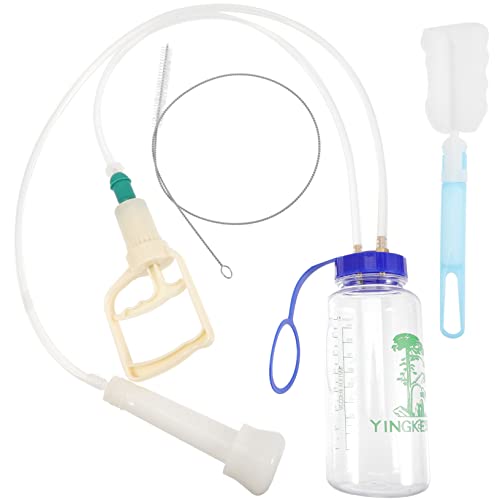
This manual milking apparatus from YARNOW is designed for small dairy tasks across cattle, goats, and sheep. It features gentle suction to protect teats while ensuring milk retrieval from the udder. The unit’s clear bottle helps users monitor milk volume for precise control, which aids in batch milking and record-keeping on busy farms. The device is described as suitable for diverse barn conditions, with an emphasis on ease of use and portability for temporary milking setups or mobile milking stations.
Key considerations include the balance between suction strength and teat safety, the ease of assembly, and how the device handles different animal sizes. The ability to milk multiple species can reduce equipment clutter in mixed herds, though performance may vary by animal and breed. Regular cleaning is essential to maintain udder health and avoid contamination. Users should verify that the parts are compatible with standard cleaning protocols and that the bottle provides a straightforward view of milk flow during sessions.
Estink Manual Goat Milking Kit
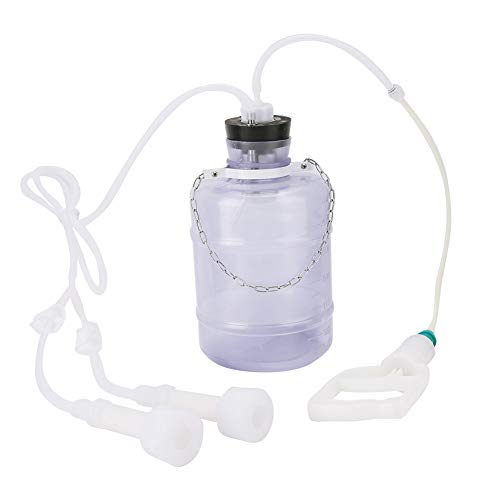
The Estink manual milking kit provides a cost-effective, portable option for small herds of goats or sheep. It uses premium plastic components designed for durability and reliability. With a 3-liter bottle capacity, it offers a practical volume for household milking or small farm operations. Operation is simple and manual, which makes it accessible for farmers who prefer low-tech solutions or want to reduce power consumption. The product is marketed as suitable for both cow and goat applications, though most effective use is for small to mid-sized animals where gentle suction is critical to prevent teat damage.
Practical considerations include bottle capacity versus daily production needs and how easily the kit can be cleaned between sessions. While manual milking minimizes electrical dependence, consistent technique is required to maintain udder health and comfortable milking experiences. The kit’s design aims to balance efficiency with user comfort, but some users may benefit from additional accessories to fine-tune milk flow and teat massage for larger dairy animals.
Cow Milking Machine Portable

This electric milking machine from GarveeTech offers a practical upgrade for farmers milking several cows per hour. A 550W motor drives the pulsation system, providing 60-80 milking cycles per minute and a consistent pace even under varying conditions. The unit includes a 25-liter stainless steel bucket and food-grade silicone components, promoting hygienic milk handling and storage. The adjustable vacuum pulsation system mirrors natural calf-sucking rhythms, which can reduce udder stress and support healthier milk yields. The ergonomic design aims to minimize operator fatigue during longer milking sessions.
Key purchasing considerations include motor reliability, pulsation tunability, and the sanitation of stainless components. Operators should assess how easily the system can be disassembled for cleaning, and whether the setup suits the herd size and barn layout. Noise levels, maintenance requirements, and availability of replacement parts are also important for long-term use. While electric units can boost efficiency, they require attention to power supply and routine servicing to maintain performance.
Zlshmoee 3L 2-in-1 Electric Milking Machine

The Zlshmoee 3L 2-in-1 milker is a compact, rechargeable device designed for efficient milking of goats and cows. It features a battery-powered pulsation vacuum pump and four teat cups, with a stainless steel bucket. The design emphasizes high efficiency and user-friendliness, with a pulsation rate and vacuum that can be adjusted to mimic natural nursing rhythms. The kit is marketed as suitable for family farms or hobby operations where mobility and quick setup matter. It also highlights safety features to prevent teat injuries during sessions.
When evaluating this model, consider the battery life and charging time for off-grid milking or fieldwork. The portability and bundled teat cups can simplify milking routines on small farms, yet users should verify compatibility with their preferred cleaning practices and milk handling workflow. As with other electric units, ongoing maintenance and parts availability are important for consistent performance.
PKNYBZN 8L Milking Machine

The PKNYBZN 8L milking machine combines a sizable 8-liter bucket with rechargeable capability and a 2-in-1 operation. The pulsation rate ranges from 43 to 46 pulsations per minute, which contributes to efficient milking while aiming to reduce animal stress. The device uses a non-return valve to prevent milk backflow, and a durable aluminum housing helps with heat dissipation. A built-in battery and portable design make it suitable for farms needing flexibility between milking locations, as well as for use during power outages or off-grid settings.
Key decision factors include the balance between milk throughput and animal comfort, battery life per charge, and the durability of the aluminum housing in field conditions. For operations with fluctuating power access, rechargeable capability is a meaningful advantage. It is also advisable to confirm the availability of maintenance parts and replacement piston elements to ensure long-term reliability.
Buying Guide
When choosing a milking solution for cows, goats, or sheep, consider the following factors to optimize udder health, milk quality, and work efficiency:
- Type and scale: Manual, semi-automatic, or fully electric units suit different herd sizes. Manual units excel for very small herds or occasional milking, while electric systems boost throughput for larger operations.
- Teat comfort and milk quality: Look for smooth silicone cups, adjustable vacuum, and pulsation settings that mimic natural nursing rhythms to reduce teat injury and ensure steady milk flow.
- Hygiene and cleaning: Stainless steel buckets and food-grade hoses are easier to sanitize. Check whether parts are dishwasher-safe or require manual cleaning, and ensure there are accessible replacement parts.
- Portability and power needs: Battery-powered or rechargeable units offer flexibility in barns without reliable electricity. Weigh the benefits of portability against durability for your barn layout.
- Capacity and workflow: Larger buckets reduce frequent stops for milking, but heavier units require physical effort. Balance bucket size with the typical daily milk yield and the number of animals.
- Maintenance and support: Availability of spare parts, local service, and warranty terms matter for long-term use. Consider brands with established customer support networks in the United States.
- Durability and materials: Stainless steel components resist corrosion and are easier to clean, while plastic parts should be UV-stable and sturdy enough for daily handling.
- Cost of ownership: Initial price is important, but also factor in energy consumption, replacement parts, and maintenance frequency over time.
For farmers prioritizing animal welfare and milk hygiene, manual or semi-automatic milking options can complement larger electric systems. When selecting products, assess how well the milker integrates with your herd, barn setup, and daily milking routine. Always follow manufacturer instructions for cleaning and maintenance to sustain udder health and milk quality across the herd.