Best Humidity Sensor for Soil: Top Picks for Gardeners and Plant Parents
Answering the need for reliable soil moisture data, these devices help you water plants precisely when they need it. Best for careful irrigation planning, indoor growers, outdoor gardens, and farmers seeking root-zone insight, these sensors measure soil moisture to guide watering decisions. The listed picks favor accuracy, durability, and ease of use, with options for basic readers and more advanced multi-parameter meters.
The following table highlights five options chosen for relevance, ease of use, and value. Use it as a quick reference to compare core strengths and ideal buyers.
| Product | Best For | |
|---|---|---|
| XLUX Long Probe Deep Use Soil Moisture Meter | Long 14 cm probe; immediate dial reading; no batteries | Deep pots and large planters; beginners and hobbyists |
| XLUX Soil Moisture Meter (Upgraded 2015) | 10-scale dial; no batteries; root-zone accuracy | All-purpose indoor/outdoor gardening; long-term reliability |
| YAMRON 4-in-1 Soil Moisture Meter | Measures moisture, pH, temperature, sunlight with backlit LCD | All-in-one soil health monitoring; versatile for varied crops |
| Antonki 2 Pack Soil Moisture Meter | Color-coded dial; no batteries; quick root-zone reading | Small spaces and multi-plant setups; simple and fast |
| THIRDREALITY Smart Soil Moisture Sensor Gen2 | Capacitive sensing; Zigbee hub required; stable data | Smart irrigation systems; tech-forward gardeners |
XLUX Long Probe Deep Use Soil Moisture Meter

The XLUX Long Probe Deep Use Soil Moisture Meter provides a deep reading with a 5.5-inch (14 cm) probe, reaching into the root zone of larger pots and garden beds. It reads as dry, moist, or wet and features a large dial with ten scales for quick interpretation. Ideal for outdoor and indoor use, this model suits gardeners who want immediate feedback without batteries. A limitation is the metal tip’s potential corrosion if left in soil for extended periods beyond about five minutes.
Who it’s best for: Home gardeners with deep pots, urban planters, and hobbyists who need reliable, battery-free, rapid moisture feedback. Choose this if you regularly maintain deep pots or raised beds where surface readings misrepresent moisture levels.
XLUX Soil Moisture Meter (Since 2015)
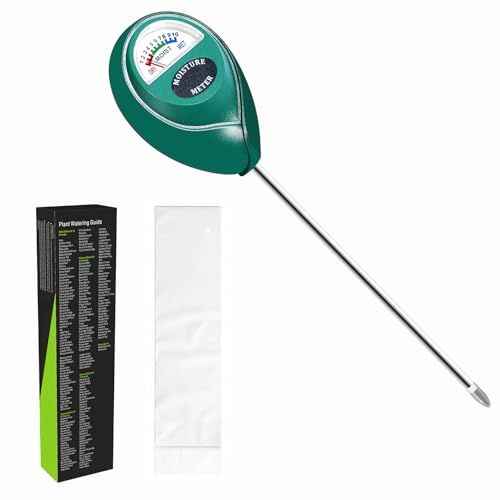
XLUX’s 2015-era soil moisture meter emphasizes root-zone accuracy with a durable stainless steel probe and a clear, color-coded dial. It requires no batteries and is widely used for long-term reliability and simplicity. The dial presents ten scales across three zones (dry, moist, wet), helping users determine watering needs at a glance. A potential limitation is the lack of digital data logging or additional parameters beyond moisture.
Who it’s best for: Beginners and experienced growers who want a dependable, easy-to-read meter without electronics. Choose this if you prefer a straightforward, battery-free instrument with proven track record.
YAMRON 4-in-1 Soil Moisture Meter

This YAMRON model consolidates moisture, pH, temperature, and sunlight readings into one device with a large backlit LCD display. It uses AAA batteries and can alert when power is low. It’s well-suited for growers seeking a single tool to monitor multiple soil conditions, which aids in more precise irrigation and plant care. A caution is that battery management is required for continuous operation.
Who it’s best for: Gardeners who want quick, digital readouts across multiple soil health metrics in one handheld unit. Choose this if you need more than moisture alone and don’t mind maintaining batteries.
Antonki 2 Pack Soil Moisture Meter

The Antonki meters deliver instant, battery-free moisture readings with a color-coded dial (red for dry, green for moist, blue for wet) across ten scales. They are simple to use: remove the probe protector, insert near roots, and read. Avoid this if you need precise, quantitative moisture values rather than category-based readings. They’re ideal for multiple plant zones in a home or garden setting.
Who it’s best for: Practically oriented gardeners who want quick guidance for several plants without any electronics. Choose this if you’re organizing a small indoor garden or several containers and prefer simplicity over precision data.
THIRDREALITY Smart Soil Moisture Sensor Gen2
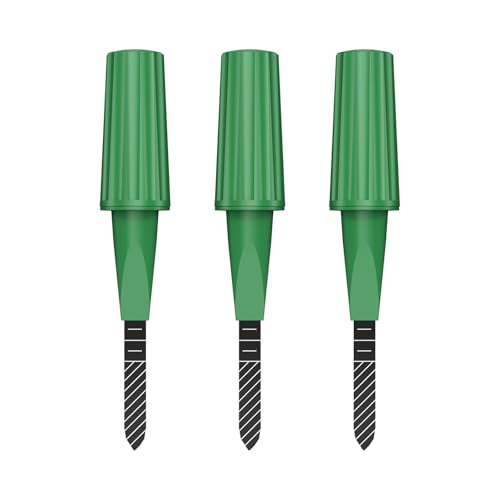
The THIRDREALITY Gen2 sensor emphasizes Zigbee-based wireless reliability and enhanced signal stability. It is designed to deliver stable moisture readings with capacitive sensing that is less affected by soil salinity or pH. This option integrates well with Zigbee hubs and smart ecosystems for automated irrigation. A limitation is that a compatible Zigbee hub is required for operation, increasing upfront setup needs for some users.
Who it’s best for: Tech-forward gardeners and smart-home enthusiasts who want to integrate soil moisture data with a broader automation system. Choose this if you already use Zigbee hubs or want to expand a smart irrigation setup.
Buying Guide
Key considerations when choosing a soil moisture sensor
- Sensor type: Analog reader with a dial is simple and battery-free, while digital meters offer multiple parameters but may need batteries or a hub.
- Root-zone accuracy: Probes reaching the root zone (usually deeper probes) provide more meaningful watering data than surface readings.
- Power source: Battery-free devices are low maintenance but may lack advanced features; digital meters require power but enable more data insights.
- Durability: Metal probes and weather-resistant housings extend life for outdoor use; avoid models with delicate tips in rough soil.
- Smart integration: Zigbee or Wi-Fi-enabled meters suit automated irrigation and remote monitoring; ensure hub compatibility if needed.
- Ease of use: Large, color-coded dials and backlit displays improve readability in bright sun or low-light conditions.
FAQs
- What is the main advantage of a root-zone moisture meter?
It measures moisture where plant roots actually take up water, giving more accurate irrigation cues than surface readings. - Do I need batteries for these meters?
Some meters are battery-free and use a direct readout, while others require batteries for digital displays or backlights. - Can I use these meters for all my houseplants?
Yes, but choose a model with a shorter or longer probe depending on pot depth and root-zone reach. - Is a smart soil moisture sensor worth it for a small garden?
If you want integration with automation and remote monitoring, a Zigbee or Wi-Fi enabled model can be beneficial; otherwise, a simple meter often suffices. - How often should I measure soil moisture?
For potted plants, measure weekly or after watering to confirm the root zone is adequately moist but not waterlogged.
These options provide a spectrum of moisture sensing capabilities. By aligning product features with your garden size, plant types, and preferred tech level, you can select a soil humidity sensor that supports precise, data-driven watering decisions.