Best Light Color for Plants: Choosing the Right Spectrum for Growth
Choosing the right light color is essential for indoor plant health. Light color, including color temperature and spectrum, influences photosynthesis, growth rate, and plant form. Rather than chasing the brightest bulb, savvy growers select spectra that align with plant needs at different stages—from seedlings to flowering. This guide highlights five top Amazon grow lights that emphasize full-spectrum output and versatile color modes, helping you pick the best fit for your space and plant types. The summary table below offers a quick at-a-glance view of core specs.
| Product | Brand | Key Spectrum/Feature | Notable |
|---|---|---|---|
| GooingTop 6000K Full Spectrum Clip Grow Light | GooingTop | 6000K White + Red LEDs; high CRI | 4/8/12H timer; USB or AC power |
| Kullsinss Halo Full Spectrum Grow Light | Kullsinss | Full spectrum 380–760 nm; detachable base | 5 dimmable levels; 3 spectra modes; 3/9/12H timer |
| Bloom Lume Full Spectrum LED Grow Lights | Bloom Lume | Full spectrum; 10W tubes; 765 lumens | 10 dim levels; 5/10/15H timer; memory |
| Shyineyou Full Spectrum Indoor Grow Lights | Shyineyou | 80 LEDs; red, blue, white channels | 3 modes; 9 brightness levels; 3/9/12H timer |
| Kullsinss Full Spectrum Wood Grain Grow Light | Kullsinss | Full spectrum 380–760 nm; woodgrain housing | 6/12/16H timer; 3 modes; 5 brightness; height adjustable |
GooingTop 6000K Full Spectrum Clip Grow Light

This GooingTop model blends 6000K white light with a bank of red LEDs to approximate full-spectrum daylight at noon. The array includes 74 white and 10 red LEDs, producing a daylight-like color rendering with aCRI around 95 and flicker-free operation to reduce strain during longer use. The compact clip-and-gooseneck design lets you align illumination precisely over seed trays, herbs, or small potted plants in indoor spaces.
Automation is a key feature: timer options of 4, 8, or 12 hours operate on a 24-hour cycle. The unit can be powered via USB or a standard AC plug, and the clamp provides sturdy placement suitable for varied setups. This light is well-suited for compact plant setups that need reliable, daylight-leaning light without overheating.
Kullsinss Halo Full Spectrum Grow Light

This halo-style grow light provides broad spectrum coverage with 48 high-efficiency diodes that span from 380 nm to 760 nm, closely mimicking natural sunlight for all growth stages. The detachable base supports two mounting methods—place the pot on the base for stability or insert into the soil for direct placement on desks, tabletops, or plant shelves—making it adaptable to a range of indoor spaces.
Smart control includes five dimmable levels and three spectra modes: white, warm white with red, and all-light-on. An automatic timer cycles on and off for 3, 9, or 12 hours, helping maintain consistent daily lighting without manual intervention. This versatility supports seedlings, leafy greens, and compact flowering plants alike.
Bloom Lume Full Spectrum LED Grow Lights

The Bloom Lume system uses multiple tubes to deliver a balanced full-spectrum glow, closely resembling natural daylight. With 10W per tube and a total of 765 lumens (approximately equivalent to a 60W incandescent), these tubes pack a bright, efficient punch. Each tube contains 44 LEDs—36 white 6000K chips, plus red and blue elements—providing a broad spectrum suitable for various growth stages.
Control is straightforward: a power setup allows toggling between tubes or lighting both, a dimmer offers 10 brightness levels, and a timer supports 5, 10, or 15 hours with memory to maintain daily activation. The clamp and gooseneck provide flexible positioning to target seedlings or compact plant shelves with ease.
Shyineyou Full Spectrum Indoor Grow Lights

Shyineyou’s setup uses 80 LEDs across red, blue, and white channels to deliver a complete spectrum suitable for all growth stages, from seedling through flowering. The tri-mode output and nine brightness levels let growers tailor intensity to plant needs and ambient room conditions, providing flexibility for different plant types and space constraints.
The unit includes a 3/9/12-hour timer for automated daily scheduling. Its compact clip-on form and adjustable gooseneck enable placement on desks, shelves, or compact plant displays while maintaining stable light distance as plants mature.
Kullsinss Full Spectrum Wood Grain Grow Light
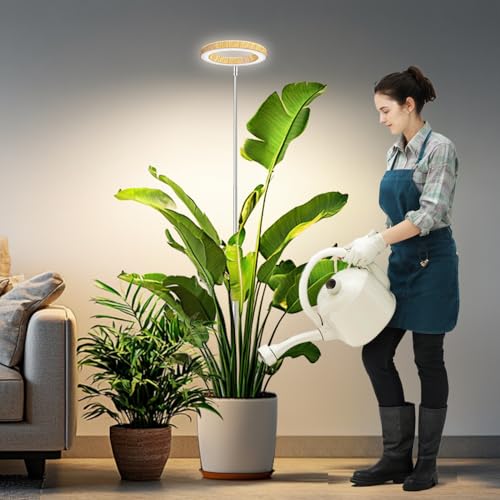
This halo-style light features a faux woodgrain housing that blends with interior decor while delivering full-spectrum 380 nm–760 nm light to support all growth stages—from germination to flowering. The design pairs practical lighting with aesthetics, making it suitable for living rooms, home offices, or dedicated grow spaces.
Three spectral modes and five brightness levels give growers versatility, while the height-adjustable frame accommodates plants as they grow. The upgraded automatic timer cycles through 6, 12, or 16 hours, offering reliable daily schedules without constant adjustments.
Buying Guide
Key considerations when choosing a light color for plants include spectrum alignment with growth stages, automation features, mounting options, and energy efficiency. A true full-spectrum light (roughly 380–760 nm) supports all plant processes, while targeted red or blue emphasis can accelerate flowering or root development. Look for devices offering a mix of white, red, and blue LEDs to mimic sunlight and provide flexibility for seedling care and leafy growth.
- Spectrum and plant stages: For versatile use, prioritize full-spectrum lights that cover the visible spectrum, with adjustable color modes or separate red/blue channels. Seedlings often benefit from balanced blue and white light, while flowering may require more red light emphasis.
- Automation and timers: Built-in timers reduce daily manual changes and help establish consistent photoperiods. Choose 3/6/12- or 24-hour cycle options, and prefer memory features that remember daily schedules after power interruptions.
- Brightness control: Dim levels enable tailoring intensity to plant size and room brightness. Look for 5–10 level dimming with clear feedback on brightness changes to avoid light shock.
- Mounting and adjustability: Clip-on, gooseneck, detachable bases, and height-adjustable frames determine how easily the light can be positioned over different setups. Consider whether you need a fixed clamp, a stand-alone base, or soil-insertion options for planter shelves.
- Coverage area and distance: Assess the recommended hanging height and coverage area. Smaller setups benefit from compact, flexible lights; larger grows may require multiple units or longer LED bars.
- Energy efficiency and heat: LEDs typically consume less power and emit less heat than traditional grow lights. Review wattage per area (e.g., lumens per watt) to avoid overheating delicate seedlings.
- Durability and aesthetics: Woodgrain or other siding designs can blend with decor while remaining functional. Reliable build quality reduces the need for frequent replacements.
In practice, a good starter setup may include a full-spectrum light with multiple color modes, a few dimming levels, and a reliable timer. For compact desks or shelves, clip-on or gooseneck designs offer flexibility, while larger setups may benefit from modular tubes or halo-style fixtures with adjustable height. Always position lights to avoid direct, harsh light on tender seedlings and to ensure uniform coverage across the plant canopy.