Best Short-Growing Grass Seed for Low-Mow Lawns and Fast Repairs
The best short-growing grass seed depends on whether “short” means less mowing or quicker coverage. X-Seed Micro-Lawn is the clearest fit for low-mow and no-mow areas, while Scotts Turf Builder Rapid Grass is designed for faster establishment. For small bare spots, Pennington Bare Spot Repair and Scotts EZ Seed offer patch-focused options. The picks below compare growth goals, sunlight needs, and the product details available.
| Product | Best For | Key Difference |
|---|---|---|
| X-Seed Micro-Lawn Slow & Low | Low-mow areas | Micro-clover and fescue mix |
| Scotts Turf Builder Rapid Grass | Faster lawn establishment | Tall fescue seed and lawn food |
| Pennington Bare Spot Repair | Small bare patches | Results reported in 5 to 14 days |
| Scotts EZ Seed Patch & Repair | Patch repair in sun or shade | Three grass types; up to 85 sq. ft. |
| Pennington Contractors Central Mix | Areas with partial sun | Designed for 4 to 6 hours of daily sunlight |
X-Seed Micro-Lawn Slow & Low

Best for: Homeowners who want a low-mow or no-mow cool-season lawn. This mix includes micro-clover, creeping red fescue, and intermediate ryegrass. The listed features describe it as suitable for sun through deep shade and for natural areas, including high-traffic spaces.
The product is selected because it directly targets slow, low growth rather than simply promising rapid establishment. Its fine fescue is described as developing deep roots, while micro-clover can contribute to soil health and naturally feed grass.
Limitation: Choose a different option if your main priority is a stated rapid-growth timeline; no specific germination period is provided for this mix.
Scotts Turf Builder Rapid Grass Tall Fescue
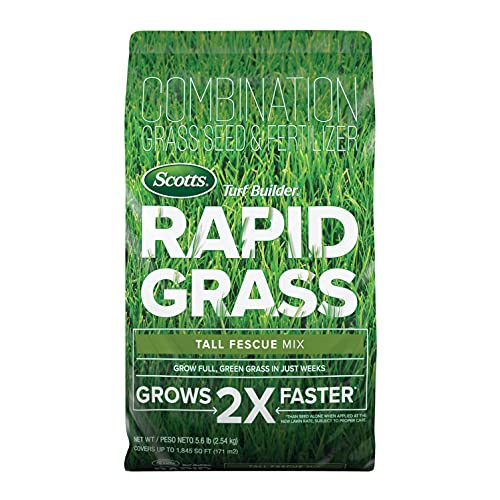
Best for: Buyers seeking faster establishment in large problem areas or a new lawn. Scotts says the seed-and-fertilizer mix grows grass two times faster than seed alone when applied at the new-lawn rate and given proper care. It combines tall fescue seed with lawn food.
This is a better choice for speed-focused planting than a low-mow blend. It is described for overseeding large problem areas as well as establishing new grass, so it serves broader lawn coverage needs than a small-patch repair product.
Limitation: Tall fescue is the stated grass type, and the faster-growth claim depends on application rate and proper care. It is not presented as a short-growing or no-mow seed.
Pennington Bare Spot Repair Mix

Best for: Lawn owners filling bare spots who want a repair-oriented product with a stated results window. Pennington says the mix establishes quickly and can show results in 5 to 14 days when used in spring or fall. The listed directions describe a three-step application.
It is selected for small repair jobs and for shoppers comparing products by the time frame provided in the product information. The seasonal guidance helps buyers consider timing rather than choosing seed based on speed alone.
Limitation: The 5-to-14-day statement is a product claim, not a guarantee for every lawn. The supplied details do not specify sunlight requirements or coverage area.
Scotts EZ Seed Patch & Repair
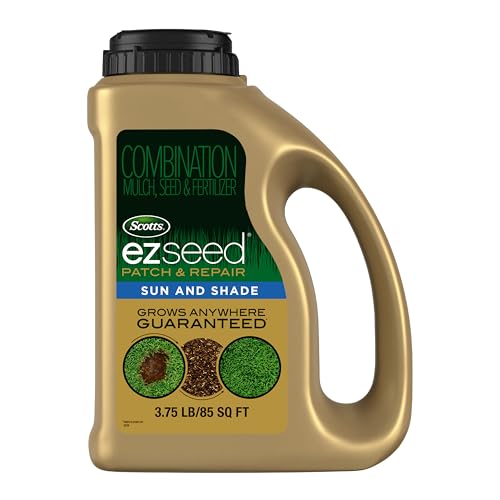
Best for: Repairing individual bare spots in areas with sun or shade. This mix contains Kentucky bluegrass, perennial ryegrass, and fine fescue. One 3.75-pound jug covers up to 85 square feet, and the listed process is to prepare the area, apply the product evenly, and water until no more water is absorbed.
It is a practical pick for buyers who want a patch-specific product with a stated coverage area and simple application steps. The blend is intended for lawn damage and bare spots, rather than broad low-mow landscaping.
Limitation: Scotts says the seed germinates best when daytime temperatures are 60°F to 80°F and there is no danger of frost. Avoid treating it as a year-round option.
Pennington Contractors Central Grass Seed Mix

Best for: Buyers seeding an area that receives four to six hours of sunlight daily. The listed feature specifically identifies this sun exposure range and describes the seed as fast growing.
This mix adds a straightforward option for partially sunny locations, where a product’s sunlight guidance can be as important as its growth speed. It is selected for that stated growing condition, not as a dedicated low-growing or no-mow blend.
Limitation: The available product details do not provide a germination timeline, grass varieties, or coverage figure. Choose another product if you need those specifications before buying.
Buying Guide: How to Choose Short-Growing Grass Seed
Do you want less mowing or faster coverage?
These are different goals. For a low-mow lawn, choose a mix specifically described as slow- or low-growing, such as X-Seed Micro-Lawn. For faster establishment, compare products with explicit speed claims, such as Scotts Rapid Grass or Pennington Bare Spot Repair. A fast-growing seed is not automatically a short-growing seed.
What sunlight does the area receive?
Track direct sunlight before choosing a blend. Pennington Contractors Central is listed for four to six hours of daily sunlight. X-Seed is described for sun through deep shade, while Scotts EZ Seed is labeled for sun and shade. Match the product to the actual site instead of assuming every mix performs the same way in shade.
Are you repairing a patch or seeding a larger area?
Patch products are made for localized damage and may provide clear application or coverage details. Scotts EZ Seed lists coverage of up to 85 square feet per jug. Scotts Rapid Grass is described for overseeding large problem areas and establishing a new lawn. Check the package instructions for the application rate suited to your project.
When should you plant?
Follow the seed product’s temperature and seasonal guidance. Scotts EZ Seed lists daytime temperatures of 60°F to 80°F and no danger of frost. Pennington Bare Spot Repair identifies spring and fall as seasons for its stated 5-to-14-day results. Weather, watering, and care can affect establishment.
Frequently Asked Questions
What is the best grass seed for a no-mow lawn?
X-Seed Micro-Lawn is the most directly aligned option in this selection because it is described for low-mow and no-mow lawns and includes micro-clover and creeping red fescue.
Is fast-growing grass seed the same as short-growing grass seed?
No. Fast-growing describes how quickly seed establishes or grows, while short-growing refers to mature height or reduced mowing needs. Check the product description for the specific goal.
Which listed product gives a stated results window?
Pennington Bare Spot Repair says users may see results in 5 to 14 days in spring and fall. Actual establishment can vary with conditions and care.
Can grass seed grow in shade?
Some mixes are described for shade, but shade tolerance varies by product. X-Seed is listed for deep shade, and Scotts EZ Seed is labeled for sun and shade.
Should I choose a patch mix for an entire lawn?
Not necessarily. Patch mixes are formulated and described for bare spots. For a new lawn or larger overseeding project, select a product whose listed use covers that scale.