Best Soil Tests for Lawn Care and Smarter Fertilizing
The best soil test for lawn care depends on whether you need nutrient results, a pH check, or ongoing moisture and light readings. MySoil is suited to lawn owners seeking nutrient and pH analysis with tailored recommendations. Rapitest and the 140-test kit are better for repeated at-home soil checks, while YAMRON and VIVOSUN are designed for quick readings of conditions such as moisture and pH. Compare what each test measures before choosing: a pH or moisture meter does not provide the same nutrient analysis as a soil test kit.
| Product | Best suited for | Listed measurements |
|---|---|---|
| MySoil Soil Test Kit | Tailored lawn and garden guidance | Nutrients and pH |
| Rapitest Soil Test Kit | Several at-home tests | pH, nitrogen, phosphorus, potash |
| Soil Test Kit 140 Tests | Frequent, broad testing | pH, ammonia, nitrogen, phosphorus, potassium |
| YAMRON 4-in-1 Meter | Monitoring growing conditions | Moisture, pH, temperature, sunlight |
| VIVOSUN 3-in-1 Meter | Basic readings in multiple locations | Moisture, light, pH |
MySoil Soil Test Kit
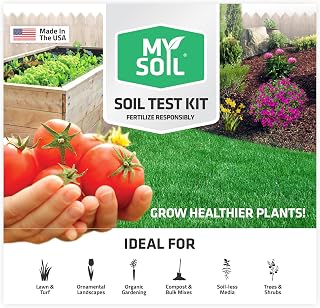
Best for: Lawn owners who want nutrient and pH analysis paired with recommendations tailored to soil and plant needs. The product description presents it as a complete nutrient test, making it a relevant choice when you want more than a simple pH or moisture reading.
Why it stands out: Its stated focus on nutrient analysis and recommendations can help guide fertilizer decisions rather than relying on a general-purpose meter. The listed product details do not specify which individual nutrients are reported or the testing process, so confirm those specifics before purchase if they matter to your lawn plan.
Rapitest Soil Test Kit
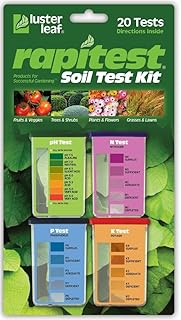
Best for: Homeowners who want to check lawn soil at several spots with an at-home kit. Rapitest measures pH, nitrogen, phosphorus, and potash. Its capsule system and patented color comparators are designed to provide quick results without sending soil away.
The kit includes components for 20 tests: five tests for each of pH, nitrogen, phosphorus, and potassium. That makes it a practical pick for comparing areas or repeating checks across a yard. A limitation is the fixed test count; users needing more tests may prefer a larger kit. Color comparison also requires reading the result against the included comparators.
Soil Test Kit 140 Tests

Best for: Gardeners and lawn owners who want a high stated test count and a broad set of soil measurements. The product describes tests for pH, ammonia, nitrogen, phosphorus, and potassium, and positions the liquid kit for lawns as well as other plants and growing settings.
The listing says the results can help users choose fertilizer types and amounts, and describes testing as a way to monitor soil regularly. Choose it if repeated measurements and several listed parameters are priorities. The broad count does not mean 140 tests for every individual measurement; check the included instructions for the exact allocation and procedure.
YAMRON 4-in-1 Soil Meter

Best for: People who want quick readings for moisture, pH, temperature, and sunlight while caring for outdoor plants. The backlit LCD is intended to make readings easier to see, and the product uses four AAA batteries, which are not included.
This meter is better for monitoring growing conditions than evaluating lawn fertilizer needs. The listed functions do not include nitrogen, phosphorus, or potassium testing, so avoid choosing it as your only tool when nutrient levels are the main question. It can complement a nutrient-focused soil test rather than replace one.
VIVOSUN 3-in-1 Soil Meter

Best for: Buyers seeking a compact meter for checking moisture, light, and pH in indoor or outdoor planting areas. It is 10.8 inches long, has a one-button mode switch, and lists ranges of 1–10 for moisture, 0–2000 for light intensity, and pH 3.5–8.
Choose this model for basic condition checks across different spots, not a full lawn nutrient profile. Its listed measurements do not include nitrogen, phosphorus, or potassium. If fertilizer decisions depend on nutrient levels, pair it with a test kit that measures those nutrients.
Buying Guide: Choosing A Lawn Soil Test
Do you need nutrient results or a quick meter reading?
Start with the decision you need to make. For fertilizer planning, choose a kit that lists nutrient measurements such as nitrogen, phosphorus, and potassium. For moisture, light, or temperature checks, a meter may be more convenient, but those readings do not show the lawn’s nutrient levels.
How many tests do you need?
Consider whether you will test one area once or compare multiple lawn zones and retest later. Rapitest lists 20 tests divided among four measurements. The other test kit is advertised as providing 140 tests, but its details should be checked to learn how those tests are distributed.
Will recommendations matter to you?
If you want guidance connected to results, look for a product that explicitly describes tailored recommendations. MySoil’s listing highlights recommendations based on soil and plant needs. Other kits provide measurements or describe how results may inform fertilizer choices, so review their instructions before relying on a specific application plan.
How should you compare lawn areas?
Test distinct areas separately when soil or turf conditions appear different. Use the same product instructions for each sample, and avoid treating a single reading as a complete picture of the whole yard. Follow the kit’s directions for sample collection and interpretation.
Frequently Asked Questions
What should a lawn soil test measure?
For fertilizer planning, look for pH and nutrient measurements, especially nitrogen, phosphorus, and potassium. A moisture-only meter does not provide those nutrient results.
Can a soil pH meter tell me what fertilizer to use?
A pH reading alone does not show all nutrient levels. Choose a test that measures the nutrients relevant to your lawn if you need a broader fertility assessment.
How often should I test lawn soil?
Testing frequency depends on lawn conditions and the product’s directions. Retesting may be useful when comparing areas or checking soil after changes, but follow the test kit’s instructions.
Is an at-home soil kit the same as a complete nutrient analysis?
No. Kits differ in their listed measurements, test counts, and recommendations. Check the product details to confirm which parameters it actually reports.
Can a 3-in-1 or 4-in-1 meter replace an NPK test?
Not based on the listed functions of the YAMRON and VIVOSUN meters. They measure conditions such as moisture, light, pH, or temperature, not nitrogen, phosphorus, and potassium.