Best Thistle Seeds to Plant for Colorful, Low-Muss Garden Interest
Looking to plant thistle seeds that are easy to grow, attract pollinators, and add dramatic foliage or vibrant blooms? This guide highlights five Amazon products that suit a range of garden goals—from ornamental borders to medicinal herbs. Best for low-maintenance landscapes are drought-tolerant varieties, while those seeking edible or medicinal uses may prefer non-GMO heirloom seeds. Each option includes who it’s best for and why it stands out.
Summary table of selected products:
| Product | Best For | Why It Stands Out |
|---|---|---|
| BuggyBeds 300+ Milk Thistle Seeds | Herbal growers and pollinator-friendly gardens | Non-GMO heirloom seeds with striking foliage and purple blooms |
| Wivolibe 300 Milk Thistle Seeds | Open-pollinated, traditional herb beds | Non-GMO, easy to grow, clear planting information |
| SPROUTARAQ 25+ Blue Globe Thistle Seeds | Colorful, architectural borders | Vivid globe-shaped blue blooms, easy to grow |
| Outsidepride 200 Milk Thistle Seeds | Gardeners wanting self-seeding perennials | Biennial, spiny foliage, large rose-pink blooms |
| Palm Beach Medicinal Herbs Scotch Thistle Seeds | Dramatic landscape accents | Biennial with tall, silver foliage accents |
Milk Thistle Seeds — 300+ Count, Non-GMO Heirloom

Best for herbal growers and pollinator-friendly gardens, these 300+ Milk Thistle Seeds deliver pure, non-GMO heirloom genetics. The Silybum marianum plants produce spiky foliage and bold purple blooms that attract bees while offering harvestable seeds for holistic use. The seeds are favored by traditional medicinal herb enthusiasts seeking plant-based liver support notes in garden form.
Who it’s best for: Home herbal gardeners and pollinator lovers who want a traditional medicinal herb with ornamental appeal. Why selected: Non-GMO heritage seeds that reliably grow into tall plants with striking foliage and collectible seeds.
Caution: As a biennial/annual, plants may take a full growing cycle to produce mature seed heads; plan accordingly for seasonal color and harvest windows.
Milk Thistle Seeds — 300 Count, Open Pollinated

Best for traditional herb beds and educational plantings, these 300 Milk Thistle Seeds are open-pollinated and non-GMO. They are suited for gardeners who value straightforward cultivation and a classic herb with medicinal potential. The listing notes responsiveness to general care inquiries, making them accessible for beginners and seasoned growers alike.
Who it’s best for: Gardeners seeking reliable, non-GMO, open-pollinated milk thistle seeds. Why selected: Emphasizes classic heritage and ease of growth for staple herb collections.
Caution: Data suggests basic growing guidance; verify local frost dates and space plants accordingly in mixed borders.
Blue Globe Thistle Seeds — 25+ Count

Best for color-focused borders and drought-tolerant displays, this 25+ Blue Globe Thistle selection features intensely blue globe-shaped blooms. It tolerates poor alkaline soil and adapts well to average soil, offering a long-lived presence without invasiveness. It is a compact choice ideal for smaller spaces or as a focal point in mixed herbaceous plantings.
Who it’s best for: Gardeners wanting a striking, low-maintenance blue accent. Why selected: Easy-to-grow globe blooms that contribute architectural interest and wildlife appeal.
Caution: Despite being described as non-intrusive, ongoing maintenance helps keep the globe heads tidy in crowded borders.
Milk Thistle Seeds — 200 Pcs, Biennial
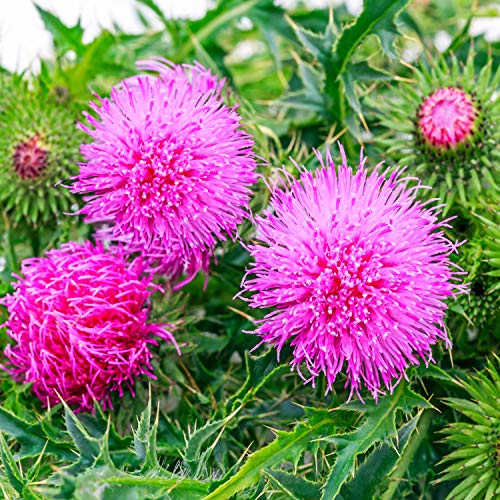
Best for gardeners wanting a self-seeding biennial, this 200-piece package supports medium-to-tall milk thistle specimens with spiny foliage and large rose-pink blooms. It suits landscape plantings where self-seeding behavior is desirable and can reduce ongoing sowing effort. The listing emphasizes hardy growth across multiple zones and year-to-year garden expansion.
Who it’s best for: Growers seeking a self-seeding, hardy biennial for extended color. Why selected: Self-seeding trait reduces replanting needs and supports consistent garden displays.
Caution: Self-seeding can lead to spread beyond initial borders; consider containment in small plots.
Scotch Thistle Seeds — 30 Count

Best for dramatic landscape accents and wildlife-friendly gardens, these 30 Scotch Thistle seeds offer tall architectural value with silver foliage. They thrive in USDA zones 3–8 with full sun and moderate moisture. Each packet includes growing instructions to support careful germination and safe cultivation of this ornamental species.
Who it’s best for: Landscape designers and wildlife enthusiasts needing a standout biennial. Why selected: Dramatic silhouette and striking foliage provide year-to-year structural interest.
Caution: Taller growth requires ample spacing; avoid crowding to maintain airflow and reduce disease risk.
Blue Globe Thistle Seeds — 500 Pcs, Self-Seeding

Best for xeriscape and large garden installations, this 500-count Blue Globe Thistle line offers drought-tolerant, self-seeding resilience. It produces 1.75-inch globe-shaped blooms in vibrant purples and blues, with leaves that add texture and movement to plant palettes. It adapts from USDA zones 3 to 8 and is well-suited for long-term border or meadow-style plantings.
Who it’s best for: Xeriscape projects and large-scale borders needing enduring color. Why selected: High seed quantity provides coverage for expansive designs and repeated blooms.
Caution: Self-seeding can require management to prevent unwanted spread in sensitive areas.
Buying Guide
What should you consider when choosing thistle seeds to plant?
- Growth habit: Annual, biennial, or perennial? Decide how tall you want your display and whether you prefer self-seeding plants to reduce replanting.
- Soil and light needs: Most thistles tolerate poor soil and full sun, but confirm zone hardiness (USDA) and soil drainage for best results.
- Bloom color and form: Globe-shaped blue blooms offer dramatic color, while rose-pink or purple blooms provide different focal points in borders.
- Medicinal versus ornamental use: Some seeds emphasize herbal or detox properties; others prioritize ornamental impact. Filter by your garden goals.
- Pollinator appeal: Many thistles attract bees and butterflies; consider planting in or near pollinator-friendly zones.
- Maintenance and containment: Self-seeding varieties save replanting but may require occasional management to prevent spread beyond intended borders.
Frequently Asked Questions
- Are thistle seeds easy to grow from seed? Yes, most thistles are straightforward to germinate with proper soil and light. Follow planting depth and spacing guidelines on the seed packet.
- Do thistle plants attract pollinators? Many thistles attract bees and butterflies, offering seasonal color while supporting biodiversity.
- Can thistles be grown indoors or in containers? Some smaller or dwarf forms may adapt to container growing, but many thistles prefer garden beds with room to spread.
- Are all thistles edible or medicinal? Not all are recommended for consumption; some varieties are primarily ornamental. Consult reliable herb resources for specific uses.
- Will these seeds self-seed in my climate? Several listed options are self-seeding; ensure your climate and garden setup support natural reseeding without unwanted spread.
- What are the cautions for growing thistle? Spiny foliage can irritate skin; wear gloves during handling and planting, and provide adequate spacing to prevent crowding.